- 44Crossing structures
- 6 / 38Overpasses / underpasses
- 82 kmHighway fencing
- 80%+Fewer collisions
- 150,000+Crossings recorded since 1996
Fences Keep Animals Off the Road, and Bridges Get Them Across
The project began amid deep public scepticism and is now the benchmark other countries copy. Fencing keeps animals off the Trans-Canada, and the overpasses and underpasses let them cross it safely. Banff's monitoring showed that the crossings do more than save individual animals: they keep whole populations of bears and other wildlife genetically connected across the highway. You will drive under several of the overpasses on the way to Lake Louise; here is how they came to be, what the science found and what they mean for the animals you hope to see.
The calendar above books the Banff Wildlife & Scenic Highlights Premium Tour (from $105, ★ 4.4 from 316 reviews on GetYourGuide). A guide drives the wildlife corridors around town, with stops at Bow Falls and Lake Minnewanka, and can explain how the fences and corridors shape where the animals turn up.
The Largest Crossing System in One Place
Between Banff's east gate and the B.C. border there are 44 wildlife crossing structures, six overpasses and 38 underpasses, plus 82 kilometres of highway fencing. Parks Canada says plainly that this is the most wildlife crossing structures and highway fencing in a single location anywhere on the planet, and that it supports the world's longest year-round monitoring program and largest dataset on wildlife mitigation.
That combination of many structures, several kinds of crossing and unbroken monitoring since 1996 is why researchers and road builders everywhere cite Banff when they ask whether wildlife crossings work.
Other Experiences You Might Enjoy
Tours that go where Banff's wildlife moves.
The animals that use the crossings are the same ones guides look for on dawn and dusk wildlife safaris along the Bow Valley Parkway and the Lake Minnewanka Loop. You can also take a guided bear-country hike, ride the Banff Gondola up Sulphur Mountain for bighorn sheep, or spend a day on the Icefields Parkway, the unfenced road north toward Jasper. The live options below update automatically for experiences in and around Banff National Park.
Why They Were Built: "The Meat Maker"
When the two-lane Trans-Canada was due to be widened to four lanes, biologists faced two linked problems. Collisions were rising, and the highway was a barrier that cut animals off from food, shelter and mates. One stretch through the park was so deadly it earned the nickname "The Meat Maker", averaging about 100 elk-vehicle collisions a year.
The answer had two parts: fence both sides of the widened highway to keep animals off it, and build crossings so they could still get across. Construction went in phases, westward from the east gate. Twinning began in 1981, the first two overpasses were finished in 1996–97 at about $1.5 million each, and the final section to the B.C. border was completed in January 2014.
How They Work: Fencing, Jump-Outs and Texas Gates
The crossings only work because of the fence. The 2.4-metre exclusion fencing steers animals toward the structures and away from the pavement. Where side roads meet the highway, wildlife guards (Texas gates) leave a gap in the fence that animals won't walk over.
Some animals still end up on the highway side, so the system includes one-way gates and earthen "jump-outs": a trapped animal can get out, but it can't get back in. Parks Canada has even tested "electro-mats" that deliver a harmless sting at breaks in the fence.
The Famous Overpasses
The overpasses are the images everyone knows: land bridges planted with native grasses, shrubs and trees, so that from the air they look like a strip of forest arching over the traffic. The original Banff overpasses are about 50 metres wide, built as buried arches covered with rock, soil and restored vegetation.
The best known is the Red Earth overpass, with more than 10,000 documented crossings on that one structure; another is the Wolverine overpass. Newer, wider overpasses east of the park, the Bow Valley Gap and Peter Lougheed crossings, draw directly on Banff's design lessons.
How Effective Are They?
This is the heart of the story, and the numbers are strong.
- Collisions are down more than 80% overall, and more than 96% for elk and deer, on the fenced, mitigated sections. Parks Canada states this plainly, and peer-reviewed work and the Yellowstone to Yukon Conservation Initiative back it up.
- More than 150,000 wildlife crossings had been documented by 2012, by 11 species of large mammal, according to Parks Canada; the total keeps growing, and later research tallies passed 165,000 through 2016.
The economic case backs up the ecological one. Collisions are expensive: US analysts estimate each prevented crash saves roughly $19,000 for a deer, $73,000 for an elk and $110,000 for a moose in vehicle, injury and wildlife costs. These are general averages rather than Banff's own accounts. On one Banff stretch, crashes fell from about 12 a year to 2.5, cutting crash costs by around 90%.
Which Animals Use Them, and What They Prefer
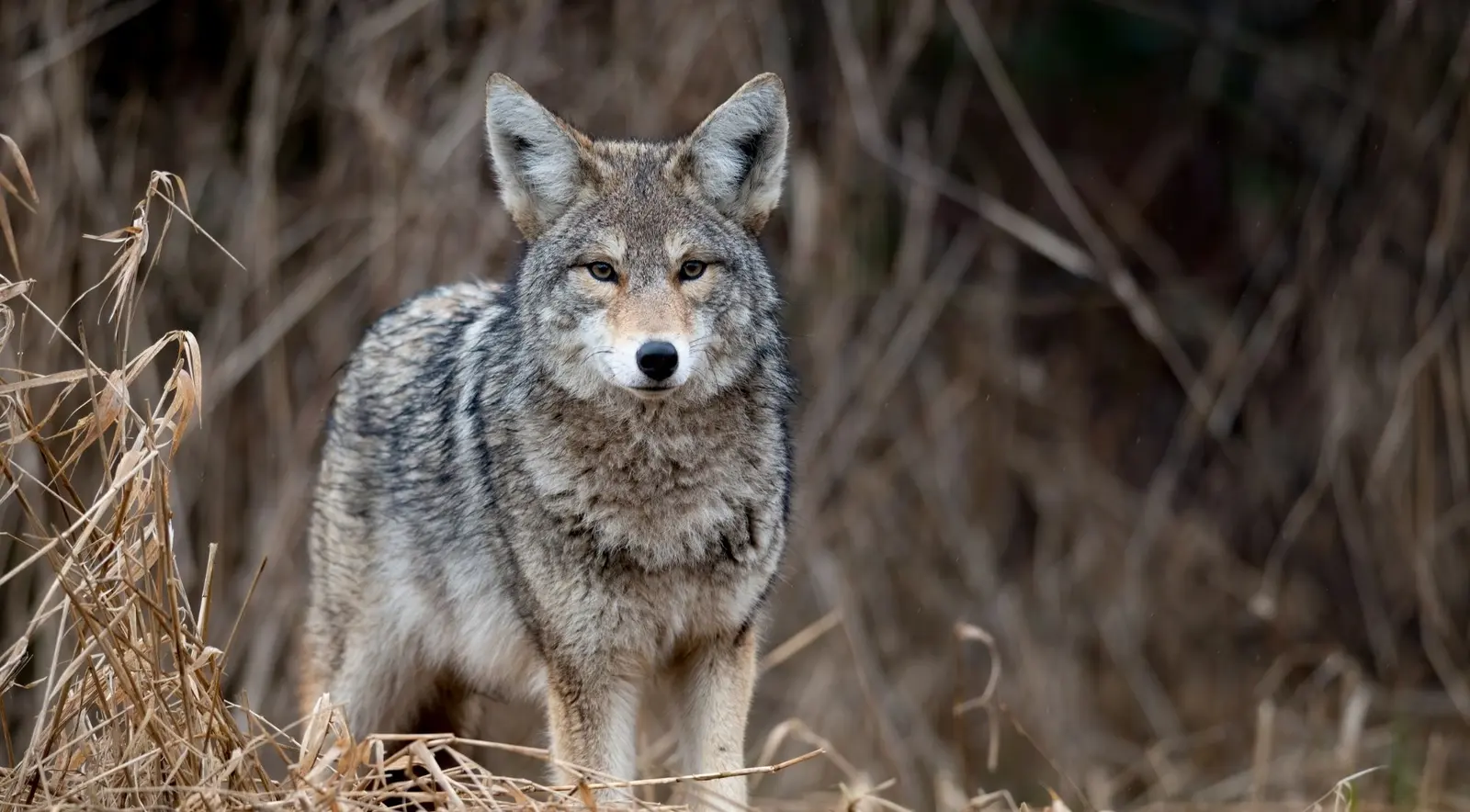
Eleven large-mammal species have been recorded using the crossings: grizzly and black bears, cougars, wolves, coyotes, elk, mule and white-tailed deer, moose, bighorn sheep, wolverine and lynx. Smaller animals use culverts and the structures too.
One of the most useful findings is that different species prefer different structures. Grizzlies, wolves, elk, moose and deer like crossings that are high, wide and short, which means the open overpasses with good sightlines. Black bears and cougars prefer long, low, narrow underpasses, where they have cover.
There is also a learning curve. Elk caught on first, and some used the overpasses while they were still under construction. Wary species took years: grizzly crossings rose from just 7 in 1996 to more than 100 a decade later, and it took 15 years before a wolverine was first photographed on an overpass. These structures work on an animal's timescale, not a construction schedule.
The Science: The World's Living Laboratory
Monitoring has run continuously since 1996, the longest-running wildlife-crossing research program anywhere. The lead researcher is Dr. Tony Clevenger of the Western Transportation Institute at Montana State University, who tracked the structures with hair traps, track pads and remote cameras in a long public-private partnership with Parks Canada.
The most important breakthrough came from Michael Sawaya. In a 2014 paper in the Proceedings of the Royal Society B, with a Banff overpass on the cover, his team used DNA from around 10,000 hair samples to show that bears weren't just crossing the highway: they were breeding across it. Parentage tests from the 2006–2008 study found that 47% of black bears and 27% of grizzlies detected at the crossings had bred successfully, with gene flow in both directions.
That answered the deepest question about crossings: they keep populations genetically connected, as well as saving individual animals. For the species themselves, see our animals of Banff guide.
Global Influence
Delegations now come to Banff to learn, and Clevenger's findings have shaped crossings far beyond Canada: the Wallis Annenberg Wildlife Crossing over the 101 Freeway near Los Angeles, set to be the world's largest; the I-90 project in Washington; the US-93 crossings in Montana built by the Confederated Salish and Kootenai Tribes; a large overpass over I-25 in Colorado; and even the first jaguar overpass, in Argentina.
The work also feeds the Yellowstone to Yukon (Y2Y) vision of connecting habitat along 3,400 kilometres of the Rockies so that people and nature can both thrive. Banff's crossings are its flagship proof that the idea works.
Corridors Beyond the Highway
Crossings solve the highway barrier, but animals also have to move through the developed Bow Valley, and there the problem is people, not asphalt. The town of Banff and its development create pinch points, so Parks Canada keeps a network of wildlife corridors free of development.
The best-known success is the Cascade wildlife corridor on the north side of the townsite. In the late 1990s, after the Bow Valley Study, Parks Canada removed a horse corral, a bison paddock, an airstrip and a cadet camp that had been choking movement. Monitoring since then shows the restoration greatly improved wolf and carnivore travel around town. It is often cited as the first proven case of a restored wildlife corridor. The Fairholme range to the east is another critical link, reconnected in 1998 by a wildlife bridge over the Two Jack Canal near Lake Minnewanka and Two Jack Lake.
Connectivity here is still fragile. Parks Canada research with GPS-collared grizzlies and wolves describes movement around the town as "already compromised", with detection rates dropping the closer animals get to Banff. The Cascade–Fenlands–Vermilion Lakes link is repeatedly flagged as important but under stress. Our Bow Falls and Bow Valley Parkway guide covers the Cascade corridor restoration in more detail.
Managing Human Use to Keep Corridors Working
Parks Canada's own research shows the key lever: when people use crossings, animals use them less. That is why people are banned from the overpasses outright. More broadly, the agency manages where and when people go, with trail closures and seasonal restrictions.
The clearest example is the Bow Valley Parkway seasonal closure. Each spring from March 1 to June 25, the eastern 17 km is closed to all travel between 8pm and 8am. This montane stretch greens up first in spring and is critical habitat for bears, wolves and cougars, which are most active, and most easily disturbed, between dusk and dawn. Research shows they roughly double their use of the area at night when it is free of people. It is the central tension of a busy mountain park: recreation on one side, and on the other the connectivity that keeps wildlife healthy.
What Visitors Can See
For a wildlife traveller, the crossings are conservation you can see from the car. You drive beneath the overpasses on the Trans-Canada between Banff and Lake Louise, and once you know to look, the grassy, tree-topped bridges are unmistakable; the Red Earth area is a good stretch. A guided Lake Louise and Moraine Lake half-day shuttle tour (★ 4.8 from 2,141 reviews) takes the same highway, so you can watch for them from the passenger seat.
Two rules apply. You cannot stop on the Trans-Canada, and you cannot walk on the structures: human presence reduces wildlife use, and access is prohibited. Enjoy them from the highway, know the story behind them, and give animals the same room and time to move wherever you meet them. Our Calgary to Banff guide shows where they are visible on the drive in.
North of Lake Louise the fencing ends. The Icefields Parkway to Jasper is unfenced, with sheep and goats often at the roadside, so drive it slowly, especially at dawn and dusk.
Challenges and the Future
Banff's crossings are a triumph, but the story isn't finished.
- The railway problem. As highway deaths plummeted, the CPKC rail line became the leading human-caused source of grizzly deaths in the park: spilled grain and trackside vegetation draw bears to the tracks. The privately owned railway is much harder to fence or bridge than the highway.
- Some species lag. Wolverine and lynx remain rare users. The 15-year wait for a wolverine crossing shows how some carnivores that are sensitive to fragmentation still struggle.
- Rising traffic and townsite pressure. Traffic on the Trans-Canada east of the park now averages more than 22,000 vehicles a day, and up to 30,000 in summer, while connectivity around the townsite stays compromised.
- Expansion and climate. Only part of the neighbouring Yoho stretch has been mitigated, and more awaits funding. Connectivity is increasingly seen as a climate-adaptation tool too, because it lets species shift their range as conditions change, which is one reason the Banff model keeps spreading.
Banff Wildlife Crossings: FAQs
What visitors ask most about the overpasses and corridors.
How many wildlife crossings are there in Banff?
44 structures, six overpasses and 38 underpasses, plus 82 kilometres of fencing along the Trans-Canada Highway. Parks Canada describes it as the most wildlife crossing structures and highway fencing in any single location in the world.
Do the wildlife crossings actually work?
Yes. On the fenced sections they have cut wildlife-vehicle collisions by more than 80% overall and by more than 96% for elk and deer, and more than 150,000 crossings had been documented by Parks Canada since 1996. DNA research has even shown that bears breed across the highway.
What animals use the Banff overpasses?
Eleven large-mammal species: grizzly and black bears, cougars, wolves, coyotes, elk, deer, moose, bighorn sheep, wolverine and lynx. Grizzlies and wolves prefer the open overpasses; cougars and black bears prefer the enclosed underpasses.
Can I visit or walk on the wildlife overpasses?
No. The structures are closed to people, because human presence reduces wildlife use. You can see them from the Trans-Canada as you drive between Banff and Lake Louise, but you can't stop on the highway or walk on the bridges.
Where can I see the wildlife overpasses?
From the Trans-Canada Highway between Banff and Lake Louise, where the planted land bridges arch over the road. The Red Earth area is a good stretch to spot one.
Why did Banff build wildlife crossings?
To reduce wildlife-vehicle collisions and reconnect habitat split by the twinned Trans-Canada Highway. One stretch was so deadly it was nicknamed "The Meat Maker", averaging about 100 elk-vehicle collisions a year.
What is a wildlife corridor?
A route kept free of development so animals can move safely through a landscape. Around the town of Banff, corridors such as the Cascade corridor let carnivores skirt the townsite, while the highway crossings reconnect habitat split by the road.