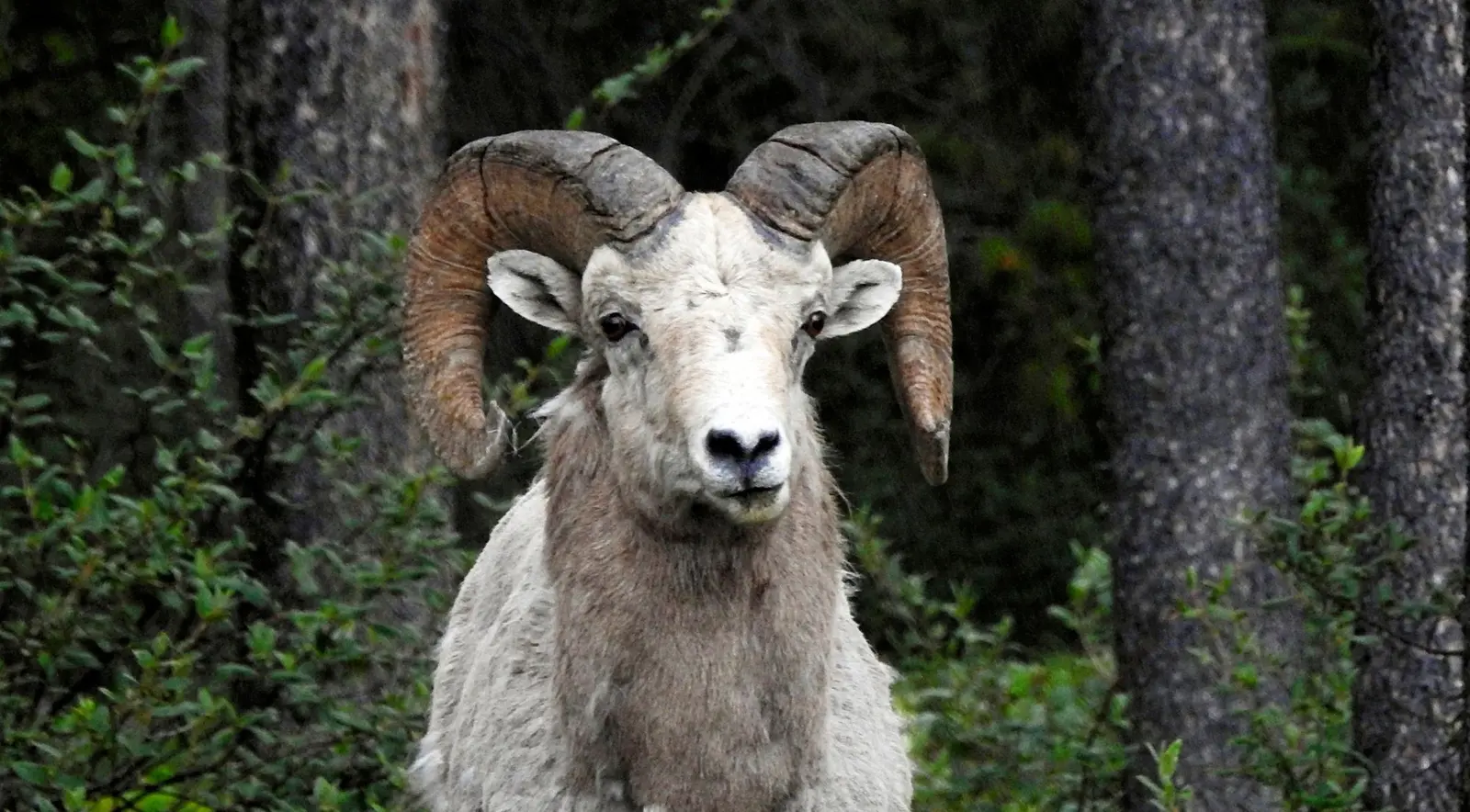
- Elk & sheepThe most realistic winter subjects
- Max 12Guests on the photography-trained guide's tour
- From CA$350Private three-hour photo workshop, plus GST
- 30 m / 100 mMinimum distances, hoofed animals / carnivores
- No dronesWithout Parks Canada authorization
Choose Between a Wildlife Tour With Photo Stops and a Photography Workshop
Winter is a superb season for photographing Banff's snowy mountains, and a rewarding but unpredictable one for wildlife. Elk, bighorn sheep, deer, red squirrels and some birds stay active through the cold months, and against snowy valleys and dark forest even a distant animal can make a memorable picture. Banff is a wild national park, though, not an enclosure: no responsible guide can guarantee an encounter or get you closer to an animal.
The calendar above books Radventures' Banff Highlights & Wildlife tour (from US$105, ★ 4.4 from over 300 reviews on GetYourGuide), a small-group wildlife tour whose guides are trained in photography and storytelling.
The first decision is whether you want a wildlife and sightseeing tour with photo stops or a private photography workshop where better pictures are the main goal. On a wildlife tour, a guide explains the landscape and watches for animals while driving you between viewpoints. On a workshop, you work on composition, exposure and timing, and any wildlife is a bonus.
This guide compares what you can book for November 2026 to February 2027, says which suits which kind of photographer, and covers where, when and how to photograph wildlife safely in Banff National Park.
Our recommendation: choose Discover Banff & Its Wildlife for an easy morning sightseeing and wildlife trip, Into the Wild's Banff Wildlife & Scenic Highlights for a longer scenic day, or Explore Banff & Wildlife in Winter for a private group. If learning camera technique matters most, ask about Monika Deviat's private Banff photography workshop or Banff Photo Workshops' five-hour session. Neither workshop is sold as a wildlife-finding trip.
Tour descriptions, advertised prices and seasons checked on 4 and 11 November 2026. Confirm November to February departures, inclusions, walking requirements and final prices with the provider before booking. Wildlife sightings and photo conditions are never guaranteed.
Banff Winter Wildlife Photography Tours Compared
| Experience | Length and season | Advertised starting price (CAD) | Type | Best for |
|---|---|---|---|---|
| Discover Banff & Its Wildlife | 3 hours; year-round | From $86 per person booked direct | Shared wildlife and sightseeing tour | First-time visitors, easy morning photos |
| Banff Wildlife & Scenic Highlights (Into the Wild Tours) | 6 hours; year-round | $109 per person booked direct | Small-group wildlife and scenery tour | More viewpoints and time for landscape pictures |
| Banff Highlights & Wildlife (Radventures) | 3 hours; winter dates on sale | From $120 per person booked direct | Small-group guided sightseeing | Photo stops and a guide trained in photography |
| Explore Banff & Wildlife in Winter | 3–4 hours; winter | From $749 per private group | Private wildlife and sightseeing tour | Couples, families or friends who want a flexible outing |
| Monika Deviat: Banff Private Photography Workshop | 3 hours, 6 hours or a full day; every season | $350 + GST for 3 hours; $650 + GST for 6 hours | Private photography instruction | Learning winter exposure, composition and technique |
| Banff Photo Workshops: Banff Area 5 Hour | 5 hours; sunrise or sunset, year-round | $567 for one photographer, GST included | Private landscape photography workshop | Serious camera users who want dedicated tuition |
Price notes: these are operators' own prices in Canadian dollars, and they don't compare directly: some are per person, one is per group and the workshops are per photographer. They also change with the date, taxes and where you book. On GetYourGuide, Discover Banff & Its Wildlife starts from US$63 and the Radventures tour from US$105. Ask the workshops how transport works, because you may need to arrange it separately.
What this table does not claim: none of these companies guarantees wildlife photographs. Even the workshops may spend most of the session on landscapes, weather and winter light. The table is there to help you match the experience to your goal.
Other Experiences You Might Enjoy
More winter days with a camera in Banff National Park.
Beyond the wildlife tours, winter photographers in Banff book the Johnston Canyon icewalk for frozen waterfalls, the Banff Gondola for the view over the Bow Valley from Sulphur Mountain, stargazing tours for night skies, and full days to frozen Lake Louise and the Icefields Parkway. The live options below update automatically for experiences in and around Banff National Park.
Discover Banff & Its Wildlife
Best for: first-time visitors with a camera or phone who want scenic stops and a chance of animals without driving in winter.
Discover Banff & Its Wildlife is a three-hour, year-round guided tour that leaves Banff at 9:30 a.m. from November to March (8:30 a.m. the rest of the year). Discover Banff Tours picks up from most Banff hotels, and the tour has a professional guide and short outdoor stops at viewpoints. Its usual stops include Bow Falls, the Fairmont Banff Springs Hotel, Surprise Corner, Hoodoos Viewpoint and Lake Minnewanka.
It is a good route for travel photography: a wide-angle lens takes in the snowy valleys and peaks, and a telephoto gives you a chance at any wildlife you meet along the way, from a safe distance. Hot chocolate or water and a maple cookie snack are included.
Why choose it for photography?
- A mid-morning start uses the winter daylight well and leaves the rest of your day free.
- Several short stops give you a range of mountain scenes.
- The guide handles the transport and the driving.
- It is easier to arrange than a private workshop if you are travelling alone.
Limitations
This is a sightseeing and wildlife tour, not a photography class. It runs to a group schedule, so don't expect the guide to wait while you change lenses or set up a tripod. Groups can reach 24 guests per guide. If you need a slow shooting pace, a private option suits you better.
Banff: Wildlife and Sightseeing Minibus Tour
The cheapest way onto Banff's winter wildlife roads with a guide. Bring a long lens for the Lake Minnewanka slopes, where bighorn sheep spend the winter, and a wide one for Surprise Corner.
Free cancellation up to 3 days before. Secure booking via GetYourGuide.
Banff Wildlife & Scenic Highlights by Into the Wild Tours
Best for: photographers who want more time out in the mountains and enjoy both wildlife and scenery.
Into the Wild Tours runs Banff Wildlife & Scenic Highlights as a six-hour, year-round tour for up to 13 people, with pickup in Banff and Canmore. The sample route includes Bow Falls, Hoodoos Viewpoint, Two Jack Lake, Lake Minnewanka, Mount Norquay Lookout and Vermilion Lakes. It costs CA$109 per person on the operator's site, subject to the live calendar; Viator sells it from $87, with only 2 reviews so far (★ 5.0).
Because it runs twice as long as the standard three-hour introduction, it suits someone after more variety: frozen or half-frozen lake shores, snowy peaks, forest scenes and the chance of animals at a respectful distance. The operator describes wildlife-focused guiding and says plainly that sightings cannot be guaranteed. It also moves its departure times through the year to catch the best light, and plans for Vermilion Lakes at golden hour whenever it can.
What makes it different?
It is a nature and landscape day with wildlife commentary, not a technical camera workshop. A group that enjoys photography gets plenty of variety, but the itinerary still depends on the conditions, the group and the short winter days. Ask about the departure time if you are hoping for late-afternoon light.
Banff Highlights & Wildlife by Radventures
Best for: visitors who want a small-group wildlife and sightseeing tour and a guide who points out good shots.
Radventures' Banff Highlights & Wildlife tour lasts three hours, takes a maximum of 12 guests in a premium van, and picks up at seven spots around Banff. Its guides are trained in photography and storytelling. Winter dates are on sale now, and in winter the tour adds hot chocolate, coffee or tea and a sweet treat; every guest also gets a Polaroid souvenir. It costs from CA$120 booked direct, or from US$105 on GetYourGuide, where it is rated 4.4 from over 300 reviews.
It is a practical choice if you care about viewpoint photography and local stories but don't need one-to-one teaching on autofocus, exposure compensation or editing. It also suits travellers who want a smaller group than a coach tour.
Important: the company's 95% wildlife sighting rate is for May to October, not for November to February. Don't use the summer figure to judge your winter chances, and don't plan around bear photographs.
Banff Highlights & Wildlife: Lake Minnewanka to Bow Falls
The closest thing to a photo tour among Banff's winter wildlife drives: a dozen seats, so everyone gets a window, a guide trained to help with composition, and the Lake Minnewanka and Bow Falls stops where winter light on snow does most of the work.
Free cancellation up to 24 hours before. Secure booking via GetYourGuide.
Explore Banff & Wildlife in Winter
Best for: families, photography-minded couples and groups who want private transport and a slower pace than a shared tour.
Explore Banff & Wildlife in Winter is a private winter tour from CA$749 per group, for up to 12 guests. Explore Banff Tours picks up in Banff, Canmore and Harvie Heights, starts at midday, and the tour runs about three hours from Banff or four hours from Canmore.
Usual stops and viewpoints include Bow Falls, the Hoodoos, Two Jack Lake and Lake Minnewanka, and the guide changes the route for the conditions and for likely wildlife. If your group is keen on photography, say so when you contact the operator and ask how flexible the time at each stop can be.
Why pay for a private guide?
- Your group travels together, without strangers.
- You can discuss your priorities and any walking limits in advance.
- A midday start is comfortable in the coldest part of winter.
- Shared among several guests, the cost per person comes down a long way.
But private does not mean specialist photography teaching. Ask whether your guide gives advice on camera settings, and don't assume the vehicle can stop wherever an animal appears: road safety and wildlife rules come first. For a shared version, the same company's Explore Banff & Wildlife tour is on GetYourGuide (from US$67, ★ 4.7 from only 9 reviews, so read the recent ones).
Monika Deviat's Private Banff Photography Workshop
Best for: enthusiasts who want one-to-one feedback on camera settings, creative technique and composition.
Monika Deviat Photography runs private, flexible workshops around Banff in every season, priced per photographer: CA$350 + GST for three hours (one sunrise, sunset or night shoot at two or three locations), $650 + GST for six hours and $950 + GST for a full day. A non-photographing companion can come along at no extra cost. Each session is tailored to your experience and interests, with the goals agreed before the day.
Locations are chosen around the forecast and what you want to learn, so the day depends on the weather, access and the plan you make with the instructor. The kind of skills it suits:
- Keeping texture in bright snow without turning the whole picture grey.
- Building a telephoto landscape from layers of peaks and forest.
- Working with backlight, falling snow, frosted trees and changing mountain light.
- Using your own camera confidently in freezing conditions.
- Planning compositions even when no wildlife appears.
Is it a wildlife photography workshop?
The instructor lists wildlife among the subjects Banff offers, but this is not a wildlife tracking session. If elk or bighorn sheep matter more to you than landscapes, ask in advance whether a wildlife-focused session is possible and what the realistic chances are. Never expect a guide to take you into closed habitat or up close to an animal.
Banff Photo Workshops: Banff Area 5 Hour
Best for: DSLR and mirrorless users who want several hours of hands-on teaching.
Banff Photo Workshops' Banff Area 5 Hour session runs year-round at sunrise or sunset and costs CA$567 for one photographer, GST included; each extra photographer pays $350 plus tax. It visits two or three locations within a 30-minute drive of Banff, such as Vermilion Lakes, Two Jack Lake and Castle Mountain, and concentrates on composition and handling light. It is open to all skill levels.
The company asks you to bring a DSLR or mirrorless camera with wide-angle and telephoto lenses, spare batteries and a tripod, which is required for the long exposures at sunrise and sunset. Its terms are stricter than most sightseeing tours: full payment is taken at booking and cancellations are not refunded, although rescheduling is encouraged and a rescheduled booking has no expiry date. Ask how transport works, especially if you have no car.
For winter wildlife, a session like this builds the skills you will want at your next encounter. But its main focus is landscape photography, so book it for the teaching first and the chance of animals second.
Which Banff Winter Photography Experience Should You Book?
Start with what you want to come home with:
| Your priority | Best fit | Why |
|---|---|---|
| "I want to spot wild animals and photograph them if they appear" | A guided wildlife and sightseeing tour, such as Discover Banff & Its Wildlife | A local guide handles the route, the commentary and the transport |
| "I want Banff's mountains, with wildlife as a bonus" | A longer scenic wildlife tour, such as Banff Wildlife & Scenic Highlights | More variety and more time for landscapes |
| "I travel with other photographers and want private transport" | A private winter wildlife sightseeing tour, such as Explore Banff & Wildlife in Winter | You can agree the group's needs in advance |
| "I want help with autofocus, exposure and composition" | A private photography workshop | Teaching is the whole point |
| "I want to photograph wolves or a grizzly in winter" | Don't book on that expectation | Sightings are rare and cannot ethically be arranged |
| "I only have a phone and want great winter pictures" | A guided sightseeing tour | Strong landscapes don't need a big camera |
If you have one free morning and photography is a side interest, paying extra for tuition may not make sense. If photography is the main reason for your trip, time with an instructor who knows your camera, your goals and the locations is often worth more than covering many stops quickly.
What Wildlife Can You Photograph in Banff in Winter?
Winter changes both how animals behave and what visitors should expect. Parks Canada explains that the montane valleys around Banff town and Lake Minnewanka get less snow than the higher mountains, which makes them important for grazing animals. Seeing one is still a matter of luck.
| Wildlife | Winter photography outlook | What to photograph |
|---|---|---|
| Elk | Active in winter; sightings possible, not assured | Animals against meadow and forest, snowy habitat |
| Bighorn sheep | Active all year, and a striking winter subject | Horn shapes, layered mountain backdrops, groups in snow |
| Mule deer or white-tailed deer | Possible in the lower valleys | Winter coats, quiet woodland settings |
| Red squirrels and winter birds | Small, busy subjects; species vary | Behaviour, snow-laden branches, environmental portraits |
| Coyotes | Active but unpredictable | Natural movement, from a distant, safe position |
| Wolves | Active, but seldom seen | Only chance sightings at a distance; never track or follow |
| Moose | Present in the region, but not reliably found on a usual Banff outing | An unexpected encounter, not part of any itinerary |
| Bears | Usually in their dens; occasionally active | Not a sensible November to February target |
Don't treat a sighting as something you paid for. Even on a beautiful day a tour may bring mostly scenery. That is normal, and the trip has not failed.
For more on each animal, read wildlife in Banff in winter, elk in Banff and bighorn sheep in the Canadian Rockies.
Best Winter Photography Locations Around Banff
These are scenic, public places, not directions to where animals rest or den. Wildlife may or may not be there. Always follow the signs, current closures, safe-parking rules and any instructions from Parks Canada. Our best photography spots in Banff covers the same places through the year.
Lake Minnewanka and Two Jack Lake
A favourite pairing for snowy peaks, dramatic light and a chance of bighorn sheep, seen from safe spots. The eastern approach stays open in winter, but the western section of the Minnewanka Loop closes from November to May to protect a wildlife corridor, so the full summer loop is not a winter circuit.
Use a wide lens for the lake and peaks, and keep a telephoto ready for distant wildlife only where there is already a legal, safe place to watch from. An animal by the road is no reason to park in a traffic lane. More detail: Lake Minnewanka and Two Jack Lake.
Vermilion Lakes
A classic Banff subject, with Mount Rundle, reeds and patterns in snow and ice. Depending on the light and the ice, it works for both wide frames and compressed telephoto mountain shots. Treat any wildlife here as a surprise, never a reason to walk to the shoreline or onto the ice.
Bow Falls and Surprise Corner
These are mainly landscape and travel-photography stops. Bow Falls has winter water and ice textures, and Surprise Corner looks down on the Fairmont Banff Springs and the forest around it. Both are good fallbacks on a day when the wildlife stays out of sight.
Hoodoos Viewpoint and the Bow Valley
A strong choice for scenery and environmental pictures, including long-lens layers of trees and mountains. If wildlife appears in the distance, keep its habitat in the frame, and don't leave the viewing area for a closer angle.
Bow Valley Parkway: only where you may stop
The Bow Valley Parkway has mountain scenery and a chance of animals, with seasonal and wildlife restrictions. The overnight restriction on its eastern section runs from 1 March to 25 June, a spring rule, not a November to February closure, and other temporary measures can still apply. Check the current notices before assuming a road or parking area is open; our Bow Valley Parkway guide lists the stops.
Lake Louise and the Icefields Parkway
Lake Louise is magnificent for snow and ice, but it is no guaranteed winter wildlife spot. The Icefields Parkway can give striking mountain pictures to well-prepared photographers, but it brings serious winter-driving hazards, little or no phone signal and weather closures. Winter tires or chains are required on the Icefields Parkway from 1 November to 31 March, and whenever it is covered in snow or ice outside those dates. Treat it as a separate scenic photography day, not an easy add-on to a short wildlife tour.
See where to see wildlife in Banff in winter for more on roads and access.
November, December, January or February: When Is Best for Winter Photos?
There is no single best month for wildlife, because animals move with the conditions, food and disturbance. For photography, each month balances daylight, snow cover and ease of travel differently.
| Month | Main photographic appeal | What to plan around |
|---|---|---|
| November | The turn into winter, patchy snow and moody skies | Snow varies; winter closures begin on some roads |
| December | Deep-winter mood, snow-dusted forests, low sun | Very short days and holiday demand |
| January | Strong winter atmosphere, snow textures and frost | Severe cold, frozen gear, possibly difficult driving |
| February | Winter landscapes with slowly lengthening days | Snow and ice are still serious; have a bad-weather plan |
Is sunrise or sunset better for wildlife photography?
Neither guarantees animals. A morning drive can bring crisp winter light. Late afternoon often gives the mountains warmer colour and longer shadows, but in December the sun sets early, and the peaks around the valley can block direct light well before the official sunset time.
If you are booking mainly for golden-hour pictures, ask whether the actual itinerary spends time at a good viewpoint near sunset. A tour that runs from noon into the afternoon may not be timed for the light you want.
Banff Winter Wildlife Photography: Camera Settings to Start From
Snow, cold and moving animals all test a camera. No one setting works for every scene, but these are useful starting points to adjust after you check your pictures.
| Situation | Starting shutter speed | Aperture | ISO and exposure notes |
|---|---|---|---|
| Still elk or sheep in good daylight | 1/500–1/1000 sec | f/4–f/8 | Auto ISO helps; check sharpness at 100% |
| Walking or trotting animal | 1/1000–1/2000 sec | Widest practical aperture | Let the ISO rise instead of blurring the movement |
| Portrait with a long telephoto | 1/800–1/1600 sec | f/4–f/8 | Focus on the eye; background distance sets the separation |
| Animal within a wide winter landscape | 1/250–1/1000 sec, as movement requires | f/5.6–f/11 | Expose carefully for snow highlights and animal detail |
| Still snowy landscape on a tripod | As the light and any movement need | f/8–f/11 | A low ISO is possible on a steady tripod |
These figures assume an ordinary digital camera and change with focal length, stabilization, how steadily you hold it and how fast the subject moves. A perched bird allows a slower shutter than one in flight, and big telephotos are harder to hold still. If in doubt, take a few test frames and check them instead of trusting a preset.
Exposure compensation for snow
Bright snow can leave pictures underexposed and grey, because the meter tries to turn most of the scene into a mid-tone. In aperture priority, try a little positive exposure compensation when bright snow fills the frame, then check the histogram and highlight warning. There is no universal "+1 stop" rule: a dark elk against bright snow may need a different exposure from an almost all-white scene.
When you edit RAW files, pull the highlights back gently. Don't flatten the snow texture away chasing a bright white picture.
Autofocus for moving wildlife
- Use continuous autofocus (AF-C) for animals on the move.
- Choose tracking, or a small focus zone that holds the animal and not the snowy background.
- Focus on the nearest eye when the animal is large enough in the frame.
- For distant animals, a wider environmental frame often looks better than a heavy crop.
- Keep a modest burst mode ready, but watch the animal instead of firing non-stop.
Which lenses should you bring?
A practical winter kit pairs a wide-angle or standard zoom (for example 16–35 mm or 24–70 mm) for landscapes with a telephoto (such as 100–400 mm, 150–600 mm or the equivalent) for wildlife. The long lens matters because wildlife has to be photographed from an ethical distance. A 70–200 mm is versatile for larger animals in their setting, but it is never a reason to move closer.
Full-frame and APS-C cameras both work well. A lighter lens you can hold steady in gloves is often more useful than a heavy one that stays in the bag. A phone is excellent for mountains and wide views but usually struggles with small, distant animals. Our best Banff wildlife tour for photographers covers the summer side of the same choice.
How to Protect Your Camera in Banff's Winter Cold
Keep batteries warm
Carry fully charged spares in an inside pocket, ideally in a small case. Cold batteries can show less charge for a while and recover once they warm up. Swap them before they run completely flat.
Manage condensation when you go indoors
Taking a freezing camera into a warm, humid room can cause condensation on or inside it. Before you go in, put the camera in a closed camera bag or a sealed bag so it warms slowly, and don't open it or change lenses until it has reached room temperature.
Keep snow off the front element
A lens hood, a soft brush and a clean microfibre cloth help. Don't rub gritty or icy snow across the glass. If moisture freezes on a filter, let it thaw safely instead of scraping it with anything hard.
Choose gloves that let you work the controls
Thin liner gloves under warm mittens let you press buttons without baring your fingers for long. Don't stand still in the cold beyond what you or your gear can take.
Use a tripod with care
Metal legs are unpleasant to handle in freezing weather, and tripod feet can slide on polished ice. Never go out on natural lake ice just to set up a shot: Parks Canada does not monitor natural ice for safety.
Ethical Winter Wildlife Photography in Banff: the Rules That Matter
A picture should never cost the animal anything. Parks Canada's wildlife-viewing rules matter most when a long lens makes it tempting to close the gap.
Minimum viewing distances:
- 30 metres from elk, deer, moose and bighorn sheep.
- 100 metres from bears, wolves, coyotes and cougars.
- Leave more room whenever an animal reacts, changes direction or looks stressed. These are minimums, not working distances for photographers.
Don't feed, lure, surround, follow or disturb wildlife, and don't follow tracks to find the animal. Drones are not allowed for ordinary recreational photography in the national park. Never use bait, calls or anything else to influence a wild animal for a photograph.
If you spot wildlife from a vehicle, slow down safely, stay inside and keep moving if it isn't safe to stop. Pull over only at a genuinely safe, permitted spot without blocking traffic. If other cars start gathering, move on instead of adding to a wildlife jam. A long lens and a picture of the wider habitat beat a dangerous roadside close-up.
To report a predator encounter, Parks Canada lists Banff Dispatch: 403-762-1470. In an emergency, call 911. Carry bear spray where you can reach it and know how to use it, even in winter, because bears can occasionally leave their dens.
Finally, think twice before sharing exact location tags for sensitive wildlife sightings on social media. A pin on a map can bring a crowd to an animal or disturb its habitat after you have gone.
Can You Photograph Banff Wildlife in Winter Without Booking a Tour?
Yes, as long as you respect the wildlife and park rules, check the current access restrictions and are ready for winter conditions. It helps to treat these as two different outings:
- Scenic photography from established viewpoints: easy to plan from Banff town, with nothing to depend on beyond the weather and the landscape.
- Dedicated wildlife photography: unpredictable by nature, needing patience, and often ending with no encounter at all.
A guided tour makes sense if you have never driven on snowy mountain roads, have no car, want wildlife commentary or would like someone else to handle the logistics. An independent photographer with a winter-ready car may prefer to spend a whole morning at one or two permitted viewpoints instead of following a group schedule.
Without a car, see Banff winter wildlife tours without a car. For the wider choice of tours, see the best Banff winter wildlife tours.
One-Day Winter Photography Itinerary From Banff
This is an example photography day, not a promise of animals and not a suggestion to stop on the road near wildlife.
Morning: a guided wildlife and sightseeing tour. Pick a confirmed winter departure, such as Radventures' Banff Highlights & Wildlife. Photograph the mountains and any animals that turn up, from a safe distance. Carry your standard zoom and your telephoto so you can switch from landscapes to wildlife without expecting too much.
Lunch and a warm-up in Banff. Dry your gloves, swap the camera battery and look through your pictures. It is a good moment to see whether your snow shots are coming out too dark or whether your shutter speed needs to go up.
Afternoon: a public landscape viewpoint. Depending on the weather, transport and access, try a familiar view close to town such as Bow Falls or Surprise Corner. There is no need to chase another sighting if the roads are busy or the light is going.
For serious photographers: book a private workshop instead of the morning group tour and spend the day on composition and technique. Keep the wildlife part of the plan flexible.
Banff Winter Wildlife Photography Tours: FAQs
What photographers ask most about winter tours, workshops and gear.
Are there dedicated wildlife photography tours in Banff in winter?
There are winter wildlife and sightseeing tours and private photography workshops, but neither is automatically a dedicated wildlife photography expedition. Ask each provider whether the itinerary, the pace and the guide's photography experience match your goals. Every wildlife sighting is opportunistic.
Which tour is best if I want photographs of elk or bighorn sheep?
Choose a winter-operating tour with wildlife interpretation and a route through low valley habitat, not a sightseeing trip planned around famous buildings. Elk and bighorn sheep are realistic winter subjects, but no operator should promise either. A telephoto lens and an ethical viewing distance are essential.
Can I photograph grizzly bears in Banff in December or January?
Don't plan a winter photography trip around bears. They are usually in their dens in these months, although Parks Canada warns they can occasionally wake. Never look for dens or follow tracks. Spring and summer are the realistic seasons for bear viewing, and even then sightings are not guaranteed.
Do I need a 600 mm lens for Banff wildlife photography?
No, but a longer telephoto helps with distant animals. A 100-400 mm or 150-600 mm lens gives you flexibility if you can handle it comfortably, and a shorter lens can make fine environmental portraits that show the snowy habitat. Keep the official minimum distances whatever your focal length.
Is November too early for snow photography in Banff?
Not necessarily. November can bring wintry landscapes, but snow cover varies with elevation and the weather. Plan for changing conditions instead of expecting deep snow at every viewpoint.
Is December a good month for Banff wildlife photography?
It can be rewarding for winter scenery and occasional sightings of active animals. Days are short, though, and some popular tours are seasonal. Choose a tour that runs in winter and plan your photos around the daylight you have, not a late-evening safari.
Is January or February better for photographers?
Both have wintry mountain scenery. January usually feels deeper in winter, while February has longer days. Neither month reliably brings better wildlife, so pick the dates that suit your tolerance for cold, the tours available and what you want to photograph.
Are sunrise and sunset photography tours worth the price?
They can be, especially if you want landscape photography instruction and help composing around mountain shadows and changing light. For wildlife alone, sunrise or sunset is no guaranteed sighting window. Check whether the workshop focuses on landscapes or animals before you book.
Are winter photography tours suitable for beginners?
Yes. Many guided sightseeing tours suit beginners with phones or simple cameras. Private workshops can also be tailored to beginners, but some providers expect you to bring a DSLR or mirrorless camera, particular lenses or a tripod, so read their equipment lists carefully.
Can I bring a tripod on a Banff wildlife tour?
Ask the operator. Even where one is allowed, a shared tour may have short stops and little room to set it up. For wildlife, handheld or monopod telephoto shooting is often more practical; a tripod earns its place for still landscapes or on a private workshop.
Can I fly a drone for winter wildlife or mountain photography?
Not as an ordinary visitor. Drones are prohibited in Banff National Park without specific Parks Canada authorization. Don't fly one near wildlife, and don't assume a photography workshop includes permission to fly.
Can I take a Banff winter photography tour without a car?
Yes. Several shared sightseeing tours pick up at Banff hotels, and some private tours cover Banff and Canmore. Photography workshops arrange transport differently, so confirm it before booking. Our car-free winter wildlife guide has the details.
What should I do if no animals appear during my tour?
Photograph Banff's scenery: the mountains, low winter light, snowy trees, frozen textures and dramatic weather. A winter tour still gives you local knowledge, transport and access to the viewpoints. A wildlife sighting is a bonus, not part of what you bought.
Which Winter Photography Experience Gives the Most Value?
For most first-time visitors, a winter wildlife and sightseeing tour is the simplest way to combine Banff's scenery with a chance of wildlife pictures. Choose a three-hour tour if your time or budget is tight, and a longer small-group day if you want more variety in the landscape.
Photographers travelling together get more flexibility from a private sightseeing tour, but ask what photography help and stop time it includes. If your main aim is to improve the technical and creative quality of your pictures, a private photography workshop is the better buy; just don't mistake a landscape workshop for a wildlife safari.
Whichever you choose, treat Banff's wildlife as a privilege to watch, not a shot to get at any cost. The best winter wildlife picture is one that leaves the animal undisturbed.
Related guides: Banff winter wildlife tours · wildlife in Banff in winter · Banff winter sightseeing and wildlife tours · where to see wildlife in winter · winter tours without a car
Sources and Further Reading
These official park pages and operator descriptions were checked on 4 and 11 November 2026. Prices, timetables and access rules can change after that.
Park guidance
- Parks Canada: safely view wildlife in Banff National Park (minimum distances, photography, roadside safety and drones)
- Parks Canada: winter in Banff National Park (winter hazards, wildlife activity and safety)
- Parks Canada: seasonal closures and restrictions (western Minnewanka Loop and other seasonal limits)
- Parks Canada: driving in Banff National Park (winter tires, chains and roadside risks)
- Parks Canada: animals in Banff National Park (montane habitat and species)
- Government of Alberta: wildlife watching and photography (ethical viewing and location sharing)
Tour and workshop providers
- Discover Banff Tours: Discover Banff & Its Wildlife
- Into the Wild Tours: Banff Wildlife & Scenic Highlights
- Radventures: Banff Highlights & Wildlife
- Explore Banff Tours: Explore Banff & Wildlife in Winter
- Monika Deviat Photography: Banff Private Photography Workshop
- Banff Photo Workshops: Banff Area 5 Hour