- Elk & sheepThe most realistic large animals
- RareWolves and moose
- DenningBlack bears and grizzlies
- 30 m / 100 mMinimum distances, hoofed animals / carnivores
- Nov–MayWestern Minnewanka Loop closed
Yes, You Can See Wildlife in Banff in Winter
Elk, bighorn sheep, deer, coyotes and several bird species stay active when the Canadian Rockies are covered in snow. Wolves, moose and cougars also live in the park through the winter, but they are much harder to spot. Black bears and grizzlies generally spend these months in their dens, so if bears are the reason for your trip, choose a different season.
The calendar above books Discover Banff Tours' year-round morning tour, the Banff Wildlife and Sightseeing Minibus Tour (from $63, ★ 4.6 from 159 reviews), a warm way to look for elk, deer and sheep from a heated vehicle.
The best winter encounters are often quiet and unexpected: a group of bighorn sheep on a snowy roadside slope, elk feeding in a valley meadow, or an American dipper swimming in an icy stream. You don't need a long hike to see them. Much of Banff's winter wildlife habitat is in the lower valleys, and some animals can be watched from suitable roadside pullouts or on a guided sightseeing tour.
One caveat: Banff is a national park, not a wildlife enclosure, and no route, season or guide can guarantee a sighting. Below you'll find which animals are realistic, which are rare, where winter viewing makes sense, and how to watch without disturbing them.
Quick answer: from November to February, expect elk, bighorn sheep, deer and winter birds, with coyotes possible. Count wolves and moose as lucky sightings, and don't plan on a bear. For a warm, vehicle-based introduction, compare our Banff winter wildlife tours.
Which Animals Can You See in Banff in Winter?
The ratings below are rough expectations, not sighting percentages. What you see depends on the weather, the time of day, your route, individual animals and luck.
| Animal | Active in winter? | How realistic a sighting is | What to look for |
|---|---|---|---|
| Elk (wapiti) | Yes | One of the more realistic large mammals | Big brown deer with a pale rump and dark neck; bulls may still carry antlers |
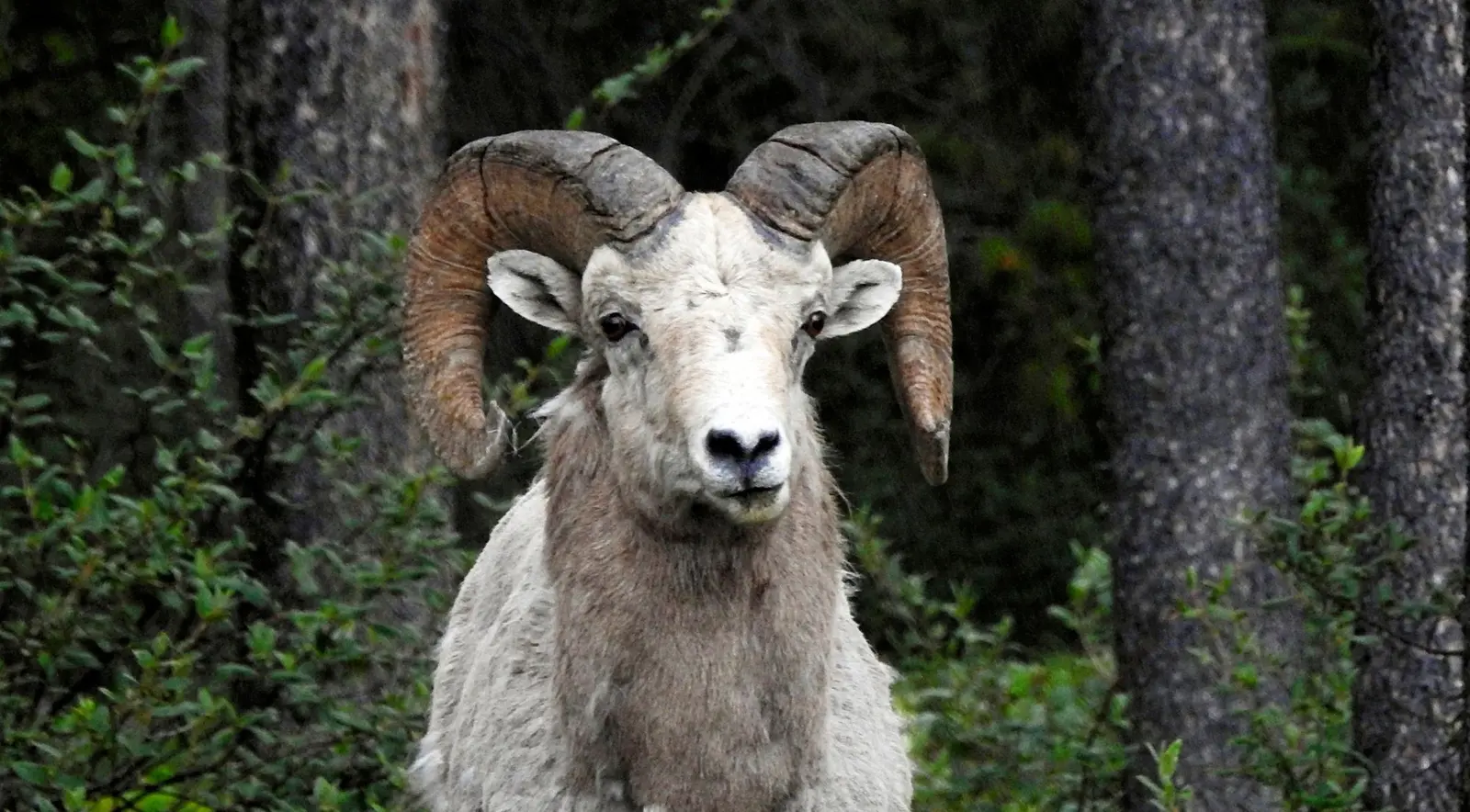
| Bighorn sheep | Yes | One of the better winter roadside chances | Stocky brown sheep, white rump, curved horns, steep rocky ground |
| Mule deer and white-tailed deer | Yes | Possible, especially in the lower valleys | Smaller than elk, with distinctive tails and faces and a bounding gait |
| Coyotes | Yes | Possible but unpredictable | Slender, dog-like, pointed ears and a bushy tail |
| Wolves | Yes | Rare and unpredictable | Larger, longer-legged canid, usually far off or passing through |
| Moose | Yes | Uncommon around Banff | Very large, long-legged, dark deer with a broad muzzle |
| Cougars | Yes | Extremely unlikely for most visitors | Elusive solitary cat; never try to find or approach one |
| Black bears and grizzly bears | Usually denning | Very unlikely in deep winter | A bear can occasionally come out in winter, but you can't plan a trip on it |
| Mountain goats | Yes | Uncommon from the usual winter sightseeing routes | Shaggy white mountain animal with short black horns |
| Winter birds | Yes | Good chances if you look on purpose | Ravens, chickadees, dippers and others near the right habitat |
Winter is not the season with the widest variety of animals on show. What it does have is snow and bare vegetation, which can make an animal easier to pick out against the landscape. The hard part is knowing where you can watch safely and legally.
Other Experiences You Might Enjoy
Ways to see Banff's winter landscapes with a guide.
Wildlife watching fits easily around Banff's other winter days out. Guided winter wildlife and sightseeing tours loop past Bow Falls, Vermilion Lakes and Lake Minnewanka; the Johnston Canyon icewalk leaves from the Bow Valley Parkway, where elk and deer winter in the valley (the trail is closed for construction work until 11 December 2026); and day trips run to frozen Lake Louise. The live options below update automatically for experiences in and around Banff National Park.
Elk: One of the Best Winter Wildlife Chances
If you are hoping for a large mammal on a winter trip, elk are the obvious animal to look for. They live in Banff National Park all year and use the lower valleys where they can reach food. You might spot one animal or a group in an open meadow or along a park road, but on a short drive they can also be nowhere to be seen.
Elk are much bigger than most deer, with tan to brown coats, a pale rump patch and a darker neck. Adult bulls may keep their big branching antlers through part of the winter before shedding them later in the season.
Where to look: open valley habitat near Banff, the Vermilion Lakes area and suitable stretches of the Bow Valley Parkway. Elk also turn up in or near town, which is no invitation to walk up to one.
Winter viewing tip: scan open meadows and forest edges from a safe stopping place. Even elk that look calm can turn aggressive, especially when surprised or crowded. Stay at least 30 metres (100 feet) away, as Parks Canada directs.
For identification, seasonal behaviour and safety, read our full guide to elk in Banff.
Bighorn Sheep: A Good Reason to Visit in Winter
Bighorn sheep are among Banff's best-known roadside animals. Their brown coats, white rumps and impressive horns stand out against snow and rock. Mature rams carry large curled horns; ewes have smaller, slimmer ones.
The cold doesn't drive them away. Parks Canada explains that bighorn sheep move down to the montane valleys or onto windswept slopes where they can reach the grass under the snow, so rocky slopes and open ground beside the road are the places to scan in winter.
Where to look: the Lake Minnewanka area is the best-known spot, and Banff & Lake Louise Tourism notes resident herds along the Minnewanka scenic drive. You may also see sheep on rocky slopes elsewhere in the Bow Valley.
One seasonal restriction matters: the western section of the Minnewanka Loop Road is closed to driving from November to May to protect a wildlife corridor. You can't drive the full summer loop, but the open section still reaches Lake Minnewanka and the popular lakeside stops when road conditions allow. Our Lake Minnewanka and Two Jack Lake guide has the details.
Winter viewing tip: scan sunny rocky slopes and bare ground rather than snowy forest; a ram's horns often catch your eye before the rest of the animal. Use binoculars and stay at least 30 metres away.
Our bighorn sheep guide covers more, including how to tell sheep from mountain goats.
Deer: Easy to Overlook, Rewarding to Watch
Both mule deer and white-tailed deer live in Banff National Park. They stay active through the winter, although where they move depends on snow depth, food and disturbance.
Mule deer have very large ears and often move with a bouncing, stiff-legged gait. White-tailed deer are usually slimmer and flick up a broad white tail when alarmed. Neither should be mistaken for a young elk, which has a much bigger body and the tell-tale pale rump.
Where to look: valley edges, wooded margins, quiet roadside meadows and some areas near Banff town. Don't walk towards deer for a photo, never offer them food, and keep at least 30 metres away.
A deer sighting may be brief, but it is still a real wildlife encounter. Stop only where parking is safe and allowed; otherwise keep driving.
Coyotes: Small Predators That Stay Active All Winter
Coyotes are active all year and may be seen crossing open ground or travelling along a valley edge. Their grey-brown coats blend into dry grass and shadow, while the bushy tail and pointed ears give them a dog-like look.
You might watch one trot alone across a snowy meadow. Nobody can promise you that, though, and you should never go looking around food waste, roadside scraps or carcasses.
Where to look: open, low-elevation habitat, seen safely from established roads or viewpoints. Don't follow animals, approach dens or use food or sound to attract them.
Parks Canada requires you to stay at least 100 metres (330 feet) from coyotes. Keep dogs on a leash and under physical control. If a coyote behaves unusually or approaches people, follow Parks Canada's carnivore-safety instructions instead of trying for a closer photo.
Wolves: Active in Winter but Rarely Seen
One of the questions we hear most is "Can you see wolves in Banff in winter?" In principle, yes: wolves don't hibernate. But a winter wolf sighting is rare, even for visitors who spend several days in the park.
Wolves cover huge territories and can move on quickly. They use valleys and wildlife corridors, but those are not predictable viewing spots. A guided tour may talk about wolf ecology and keep an eye out, yet it can't reliably produce a wolf.
A wolf is generally bigger and longer-legged than a coyote, with a broader head and different proportions. At a distance it can be hard to tell, and a large animal glimpsed from a car shouldn't automatically be called a wolf.
The responsible approach: enjoy a wolf if you are lucky enough to see one. Don't follow tracks, leave established routes or go into sensitive areas. Parks Canada says to stay at least 100 metres from wolves, report encounters to park staff and never feed or entice them.
If wild wolves are the main reason for your Banff trip, know that no ordinary winter sightseeing itinerary can offer dependable sightings.
Moose: Possible, but Don't Count on One
Moose live in the Canadian Rockies, Banff National Park included, but they are rarely the animal a first-time visitor spots around Banff town. They tend to be solitary and are hard to pick out against willow thickets, wetlands and forest.
A moose is far bigger than a deer, with a long muzzle, deep shoulders and very long legs. Adult bulls carry broad, flattened antlers at some times of year, but antlers are no reliable winter clue because they are shed each season.
Where to look: wetland or willow habitat seen from maintained roads and public viewpoints. Moose do turn up unexpectedly, but searching marshes on foot in winter is neither safe nor effective.
Moose can be dangerous even when they look relaxed. Stay at least 30 metres away under Parks Canada's wildlife-viewing rules, and give much more room if an animal seems agitated or is blocking your way.
Bears: Why Winter Is Usually the Wrong Time
Banff is famous for grizzly and black bears, so it is natural to ask whether you can see one in December, January or February.
In a normal winter, bears are denning. They put on fat during the active season and spend most of the cold months sheltered in dens. Parks Canada cautions that bears can wake or come out for short spells, so bear safety still matters all year. But a sighting is unlikely enough that no winter trip should be sold or planned as a bear safari.
There is no "best winter bear-viewing spot" to recommend, and you should never look for dens or follow bear tracks. If bear watching is a main goal, look at spring and the rest of the active season in our month-by-month Banff wildlife calendar and our guide to seeing bears in Banff.
Even in winter, Parks Canada recommends carrying bear spray, knowing how to use it and staying alert on trails.
Cougars and Mountain Goats: Present, but Not Realistic Targets
Two more animals often make it onto Banff wish lists.
Cougars stay active in winter, but they are elusive and visitors rarely see them. Don't go looking for one. If you do meet a cougar, follow the official carnivore-safety advice and report the encounter.
Mountain goats live in rugged high terrain, and their white coats make a tempting winter photo. But high-elevation terrain is neither accessible nor safe for wildlife watching in deep winter, and goats are much less practical to find on an ordinary town-based sightseeing day than bighorn sheep.
For most winter visitors, neither animal should decide where you stay or which tour you book.
Winter Birds: Small Encounters That Are Often Overlooked
A winter walk with an eye on the birds can be surprisingly rewarding, even on a day with no large mammals. Parks Canada's bird-watching guide lists several winter species around Banff, including:
- Common ravens, heard or seen around the forests and valleys.
- Black-capped, boreal and mountain chickadees, small birds that stay busy in the cold.
- Clark's nutcrackers, found around conifers and at higher elevations.
- American dippers, remarkable little birds that swim and feed in moving water even in freezing weather.
- Common goldeneyes and a few other waterfowl on open water, depending on conditions.
Parks Canada mentions American dippers at Bow Falls and small patches of open water near Third Vermilion Lake, where dippers and some waterfowl may spend the winter. Watch from safe public access points, and never assume a riverbank, thin ice or frozen wetland will hold your weight.
For families and photographers, finding a dipper or a chickadee can be a more satisfying winter challenge than spending a whole morning hoping for a wolf.
Where Is the Best Place to See Wildlife in Banff in Winter?
No single place is guaranteed. The best bets are low-elevation, publicly accessible areas where animals move or feed naturally. Always check conditions and closures just before you set out. Our guide to winter wildlife-viewing locations and roads takes each place in turn, with three short routes from town.
| Area | Why go | Winter limitation |
|---|---|---|
| Lake Minnewanka Road and open viewpoints | Scenic rocky habitat; bighorn sheep are a regular possibility | Western Minnewanka Loop closed to vehicles November to May |
| Vermilion Lakes Drive | Open valley and wetland near Banff; birds and the odd larger mammal | Road and viewpoints can be icy; keep away from open water |
| Bow Valley Parkway (Highway 1A) | Low valley habitat with forest edges and meadows | Check closures, conditions and seasonal restrictions; never stop in traffic |
| Banff town and nearby viewpoints | Elk or deer sometimes appear surprisingly close to town | Animals are still wild; keep your distance and respect local restrictions |
| Bow Falls and Bow River viewpoints | A chance of winter birds such as American dippers | Icy paths, cold water and slippery banks call for care |
Two mistakes to avoid:
- Trying to drive the whole Lake Minnewanka summer loop. The western part closes every winter to protect wildlife.
- Treating the Banff Springs Golf Course Road as a winter wildlife drive. Parks Canada lists it as closed to driving from November to May.
Our best places to see wildlife in Banff guide covers the geography, and our Bow Falls and Bow Valley Parkway guide covers those two areas in depth. For winter, check Parks Canada's current closure list and 511 Alberta before you pick a route.
Should you drive the Icefields Parkway to look for wildlife?
Not for that reason alone. The Icefields Parkway is an extraordinary winter landscape, but conditions can be severe and sightings are unpredictable. Parks Canada warns that winter services are limited, there is no cell coverage along the route, and the road can close with little notice.
Winter tires or chains are required by law from November 1 to March 31, and at any other time when snow or ice covers the highway. If you are not used to mountain winter driving, choose an easier Banff outing or a properly run guided trip. Our Icefields Parkway guide covers the drive.
Banff Winter Wildlife by Month
You can see wildlife right through this period, but the month is no formula for sightings. Use the notes below to plan, not as a promise about what the animals will do.
November: the turn into winter
Snow cover and conditions vary in November. Elk, deer, bighorn sheep, coyotes and winter birds are all possible. Bears are more and more likely to be in their dens, though the timing depends on the animal and the conditions.
Best approach: a shorter guided wildlife-and-scenery tour or a flexible drive in the lower valleys. Check road conditions before committing to higher routes.
December: snowy scenery and lower-valley wildlife
December brings short days and classic winter scenery. Elk and bighorn sheep are the animals to watch for, and birding at safe, accessible water edges adds variety. Wolves remain rare, and bears are not a realistic goal.
Best approach: sightsee in daylight and skip ambitious drives after dark. Pair a wildlife tour with other winter activities, and don't judge the day by how many animals you saw.
January: deep winter
January often means severe cold, snow and icy roads. Large mammals may use the lower ground, but where they go stays unpredictable. Bighorn sheep, elk, deer and birds are the sensible priorities. Never follow tracks into the forest or onto frozen lakes.
Best approach: a vehicle-based tour, or a short outing to one or two reliable public viewpoints. Pack warm layers and leave extra time for winter driving.
February: longer days, similar wildlife
February slowly gives you more daylight than December and January, which helps with photography and sightseeing. The realistic list is much the same: elk, sheep, deer, coyotes and winter birds, with wolves and moose as rare possibilities.
Best approach: mix scenic stops with patient watching. An animal that shows up for two minutes is a bonus, not proof that one route always works.
For choosing a time of year more broadly, see when to visit Banff for wildlife.
What Time of Day Is Best for Winter Wildlife Viewing?
Morning and late afternoon can both be good, but there is no dependable rule that every Banff species is easiest to see at sunrise or sunset on every winter day. Activity varies with the species, weather, disturbance and place.
For visitors, daylight and road safety often matter as much as animal behaviour:
- Morning: a practical time for a guided wildlife-and-scenery tour, especially if you want the rest of the day free.
- Midday: good for family outings and photography, when it may be warmer and clearer. It is not wasted time.
- Late afternoon: beautiful winter light and a chance of active animals, but plan to finish before darkness makes driving and stopping harder.
Instead of racing between viewpoints, pick a few good places and give yourself time to scan from a safe spot. Bring binoculars: they let you enjoy an animal without moving closer.
Is a Winter Wildlife Tour Worth Booking?
It can be, especially on a first visit, without a rental car, or if you would rather not drive on icy roads. A good guide explains animal behaviour and how the park's ecosystem works, and the scenery is worth the trip even when the animals stay out of sight.
But don't buy a winter tour on the assumption that a guide can guarantee bears, wolves or moose. Some of Banff's best-known wildlife safaris, Discover Banff's Evening Wildlife Safari among them, run only from April to October. Look for tours that list winter or year-round departures.
One example is Discover Banff & Its Wildlife, a year-round sightseeing and wildlife-interpretation tour sold on GetYourGuide as the Banff Wildlife and Sightseeing Minibus Tour. The operator says wildlife sightings are possible but not guaranteed.
If you are choosing between tour styles, our comparison of Banff winter wildlife tours covers the options, durations, pickups and what to check before booking.
Banff: Wildlife and Sightseeing Minibus Tour
A three-hour morning loop from Banff by Discover Banff Tours, with hotel pickup, a hot chocolate and maple cookie stop, and a guide scanning the Minnewanka slopes for sheep and the meadows for elk.
Free cancellation up to 3 days before. Secure booking via GetYourGuide.
How to View Banff Wildlife Safely in Winter
Winter wildlife watching should be quiet, distant and brief. Pressure from people can force animals to burn energy they can't spare at the hardest time of year.
Parks Canada's minimum viewing distances
| Wildlife | Minimum distance |
|---|---|
| Elk, deer, moose, bighorn sheep | 30 metres / 100 feet |
| Bears, wolves, cougars, coyotes | 100 metres / 330 feet |
These are minimums, not targets. Give animals more room if they look alert, stressed or hemmed in, and use a telephoto lens instead of walking closer. If an animal changes what it is doing because of you, you are too close.
A few rules matter even more in winter:
- Never feed, entice, approach, crowd or follow wildlife. Feeding or disturbing wildlife is illegal in a national park.
- Stay in your vehicle for roadside wildlife. Pull over only where it is safe and legal, and never block a lane or traffic.
- Respect every road and area closure. Some winter closures exist to protect sensitive wildlife corridors.
- Don't follow tracks. A beautiful line of footprints is not an invitation into wildlife habitat.
- Keep dogs leashed and under control. Dogs can provoke run-ins with wild animals.
- Carry bear spray on trails, know how to use it and stay alert. Bears can occasionally wake even in winter.
- Take ice, cold and avalanche hazards seriously. Check the official trail reports and keep off frozen water nobody has assessed.
For unusual encounters with bears, wolves, cougars or coyotes, Parks Canada lists Banff Dispatch: 403-762-1470.
Read Parks Canada's wildlife viewing rules, its winter safety guidance and its carnivore safety advice before you travel.
What Should You Bring on a Winter Wildlife Outing?
You don't need specialist gear for a vehicle-based trip, but a little preparation keeps you comfortable and stops you edging closer to an animal for a better look.
- Binoculars: probably the most useful thing you can bring for distant wildlife.
- Warm layers: a thermal base, insulation and a windproof outer layer.
- Insulated winter boots: icy parking areas and viewpoints can be slippery.
- Hat and gloves: thin liner gloves help if you want to work a camera.
- Phone or camera with zoom: photograph wildlife from the required distance.
- Spare battery or power bank: cold drains batteries fast.
- Water and snacks: especially if you are driving outside Banff town.
- Vehicle emergency supplies: if you are driving yourself, prepare for changing weather and check the official road reports.
For winter walks, Parks Canada recommends ice cleats and checking trail conditions. A viewpoint can be much colder and windier than the town centre.
Wildlife in Banff in Winter: FAQs
What visitors ask most about Banff's animals between November and February.
What is the easiest wildlife to see in Banff in winter?
Elk, bighorn sheep and deer are the most realistic large animals. Winter birds can be rewarding too if you look for them. Nothing is guaranteed, and the best species to watch for depends on your route.
Can you see bears in Banff in December?
It is very unlikely. Black bears and grizzly bears generally den through the winter, although individual bears can wake briefly. Don't choose December for a bear-watching trip, and never try to find a den.
Are wolves more common in Banff in winter?
Wolves stay active, but being active doesn't make them common. They roam widely, so treat a sighting as a rare stroke of luck, not the expected result of a winter tour.
Are there moose in Banff in winter?
Yes. Moose live in the park and stay active in winter, but sightings along the popular Banff sightseeing routes are uncommon. Don't approach a moose or walk into marshes to look for one.
Where can you see bighorn sheep in Banff in winter?
The Lake Minnewanka area is the best-known place, where sheep use rocky slopes and low winter range. The western Minnewanka Loop is closed to driving from November to May, so plan around the open eastern section and check conditions.
Can you see wildlife in Banff without a car?
Yes, sometimes near town and from public viewpoints, but a guided winter sightseeing tour with wildlife stops is usually more practical than trying to reach scattered habitat on foot. Never approach an animal just because it is near a path or a hotel.
Is Banff or Jasper better for winter wildlife?
Both parks have active winter wildlife and neither guarantees sightings. The better choice depends on your route, road conditions, where you stay and whether you want a guided trip. Don't drive a long mountain highway just in the hope of seeing one animal. Our Banff vs Jasper wildlife guide compares the two.
Do Banff wildlife tours run in January?
Some do. Discover Banff Tours, for example, runs a year-round sightseeing and wildlife tour, the Banff Wildlife and Sightseeing Minibus Tour. Other well-known safaris are seasonal, so check the actual departure dates, pickup times and whether the itinerary suits winter.
Is it safe to photograph wildlife from a Banff roadside?
Only if you are safely parked in a permitted spot, stay in your vehicle for roadside animals and keep Parks Canada's minimum distances. Never stop in a driving lane or walk towards an animal for a closer shot.
What Should You Realistically Expect?
On a Banff visit between November and February, look forward to snowy mountain scenery and a chance of elk, bighorn sheep, deer, coyotes and winter birds. Wolves and moose are possible but uncommon bonuses, cougars are extraordinarily hard to see, and bears are generally in their dens.
The most satisfying winter wildlife trip treats every sighting as a privilege, not a promise. Choose safe, accessible viewpoints, learn about the animals and their winter habitat, and enjoy the Rockies even when the wildlife keeps its distance.
Planning your visit? Compare Banff winter wildlife tours, explore the best places to see wildlife in Banff, and check the Banff wildlife calendar to decide whether winter suits what you want to see.
Sources and Further Reading
The species notes and safety advice draw mainly on Parks Canada and Banff & Lake Louise Tourism. Check their pages again before you travel, especially for temporary closures.
- Parks Canada: animals in Banff National Park
- Parks Canada: winter in Banff National Park
- Parks Canada: wildlife and you
- Parks Canada: stay safe and keep carnivores wild
- Parks Canada: bird watching in Banff
- Parks Canada: weather conditions
- Parks Canada: seasonal closures and restrictions
- Parks Canada: driving in Banff
- Banff & Lake Louise Tourism: wildlife in Banff
- Banff & Lake Louise Tourism: drive the Minnewanka Loop