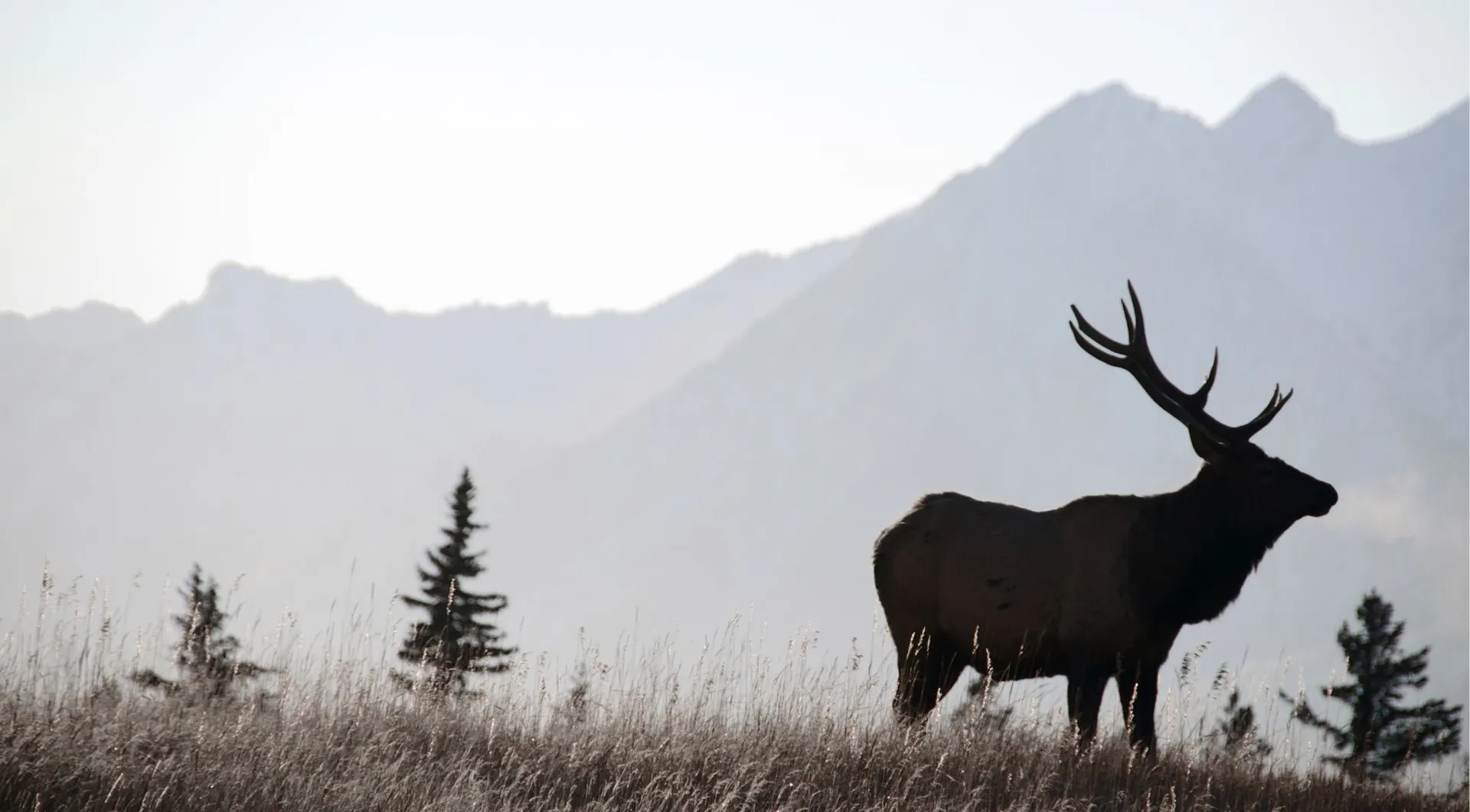
A bull elk at dusk on a Banff wildlife safari
Banff wildlife tours · What you'll see & how to book · 2026

Banff Wildlife Tours: What You'll See and How to Book

Banff has one of the most accessible large-mammal populations on earth — but a first-timer driving the same roads sees a fraction of what a guide finds. Here's what a wildlife tour actually involves, which animals you can realistically expect, and how to book the right one.

Elk & bighorn near-certain Dawn & dusk are best
  • 4 typesOf Banff wildlife tour
  • ~2 hrsEvening safari, no walking
  • 260+Bird species in the park
  • 30 / 100 mLegal wildlife distances
  • Dawn/duskWhen animals move
Start here · four different products

What a Banff Wildlife Tour Actually Is

There's a moment on almost every Banff wildlife tour when the guide slows the van, kills the chatter, and points at a treeline that looked empty ten seconds earlier. A bull elk steps out. Someone gasps. It's a small thing, and it's the entire reason the tour exists — the animals were always there, and you'd have driven straight past them. Most people searching for a Banff wildlife safari end up looking at one of four quite different things, and they're not interchangeable.

Check live availability and prices on GetYourGuide. Pоwered by GetYourGuide.
The flagship

The evening wildlife safari

The one most visitors book: a roughly two-hour, paved-road minibus tour departing near dusk, with hotel pickup and little to no walking. It threads the corridors around town — Vermilion Lakes, the Banff Springs golf-course loop, the Lake Minnewanka loop and the lower Bow Valley Parkway — changing nightly on where animals were reported. It works because Banff's large mammals are crepuscular. See our full evening safari review.

Quieter, ranges further

Morning & small-group tours

Dawn is every bit as productive as dusk and far less crowded. Morning tours run three to four hours, often with Banff and Canmore pickup, and range further — sometimes onto the Icefields Parkway. Small-group operators use smaller vehicles: fewer people means less noise, faster stops, and everyone gets a window.

For serious naturalists

Private & naturalist-led tours

At the specialist end sit interpretive, hiking-based private tours and dedicated birdwatching outings led by accredited naturalists — smaller caps, no transport, far deeper content. Book these if you want to understand the ecosystem rather than tick off species.

Read the fine print

What is not a wildlife tour

Several operators sell "grizzly bear" experiences that visit a captive grizzly at Kicking Horse or a wolfdog sanctuary. These can be interesting and educational, but they're captive-animal attractions, not wild viewing. Our bear watching guide explains the difference in full.

Most-reviewed · easiest to book

Banff: Evening Wildlife Safari Guided Tour

★ 4.0 (500+ reviews) Free cancellation

The flagship two-hour dusk safari and the most-reviewed wildlife tour in Banff. Hotel pickup, a relaxed pace, and a route re-planned each evening on the day's sightings through the Bow Valley and the Minnewanka loop.

Check availability & prices

Hotel pickup in Banff. Secure booking via GetYourGuide.

Early risers · fewer crowds

Banff Sunrise Tour: Lake Louise, Wildlife & Johnston Canyon

From $105 ★ 5.0 Small group

A morning alternative that pairs first-light wildlife watching with Lake Louise and Johnston Canyon before the coaches arrive. Ideal if photography and empty roads matter more to you than the lowest price.

Check availability & prices

Small group, pre-dawn departure. Secure booking via GetYourGuide.

Honest tiering

What You'll Actually See in Banff

Managing expectations is the difference between a great evening and a frustrating one. Here's the honest breakdown by how likely each sighting really is.

Likelihood Animals Where & notes
Near-certainElk, bighorn sheepElk on Vermilion Lakes Drive, the golf course and in town; sheep on the Minnewanka road and Mount Norquay Road. Note the Bow Valley elk herd is in decline (123 counted in autumn 2024, down from 267 in 2018).
Good oddsMule & white-tailed deer, black bears, coyotes, birdsDeer and spring black bears along Vermilion Lakes and the Bow Valley Parkway; coyotes on Mount Norquay Road; 260+ bird species including bald eagles and ospreys.
LuckyGrizzly bears, moose, mountain goatsGrizzly density has fallen near paved roads, so a roadside grizzly is genuine luck. Moose are now rare (best odds on the Icefields Parkway); goats favour high cliffs.
RareWolves, cougarsBow Valley and Fairholme packs are elusive — best at dawn/dusk on the Bow Valley Parkway or on winter ice at Lake Minnewanka. Cougar sightings are vanishingly rare.

Short version: you'll almost certainly see elk or sheep; bears and wolves are never promised. Banff's most famous grizzly, Bear 122 "The Boss" — 650–700 lb and usually the first bear out of his den each spring — is a bucket-list sighting nobody can guarantee.

Worth adding to your itinerary

Other Experiences You Might Enjoy

Most visitors pair a wildlife safari with the region's headline scenery.

A wildlife tour is rarely the only thing on a Banff itinerary. Many travellers combine a Banff safari with a sunrise trip to Lake Louise and Moraine Lake, a drive up the Icefields Parkway toward the Columbia Icefield, or a day tour from Canmore and Calgary taking in Johnston Canyon, Emerald Lake and Lake Minnewanka. The live options below update automatically for these Canadian Rockies experiences.

A quick wildlife calendar

When to Go: Banff's Wildlife Season by Season

Every season delivers something different. Match your trip to the animals you most want to see.

March–May: spring bears

Grizzlies emerge (The Boss has appeared as early as late February). Bears and elk feed on roadside greenery and dandelions, making spring one of the strongest windows for bear viewing from a vehicle. Elk calving begins in May — cows become genuinely dangerous around calves.

June: calving & closures

Calving continues, bears remain low, and the Bow Valley Parkway runs its overnight closure (8pm–8am) to protect sensitive species. Verify current dates before any self-drive.

July–August: buffaloberry

Buffaloberry season is the single most important period in a grizzly's year — a bear may forage up to twenty hours a day. Bears drop into valley bottoms near roads and trails. Alpine species are reachable by gondola and on foot.

Sept–Oct: the elk rut

The rut peaks in the last two weeks of September. Bulls bugle and turn aggressive around the townsite and Banff Springs grounds. Bighorn rams rut too. Arguably the most dramatic time to visit.

November to February: bears den, wolves are tracked on frozen lakes, and the park empties out. Some operators run winter wildlife tours, though availability is thinner. For a full month-by-month plan, see our best time to visit Banff wildlife guide.

The corridors

Where Banff Wildlife Tours Go

Routes change nightly, but almost every tour works some combination of these five corridors.

The premier corridor

Bow Valley Parkway (Hwy 1A)

The best wildlife route between Banff and Lake Louise. The eastern 17 km carries an 8pm–8am overnight restriction (Mar 1–Jun 25) plus spring/autumn daytime cycling closures — check current dates before a self-drive.

Minutes from town

Vermilion Lakes Drive

4.5 km alongside wetlands: elk, deer, beaver, muskrat, eagles, ospreys, waterfowl, and at dawn the occasional moose.

Highest-percentage loop

Lake Minnewanka Loop

Bighorn sheep near-guaranteed, elk and coyote common, and grizzlies occasionally in the meadows near the Trans-Canada turnoff.

Switchbacks & sheep

Mount Norquay Road & Icefields Parkway

Norquay Road climbs past reliable bighorn sheep and mule deer; the Icefields Parkway (Hwy 93N) is the long-format option — goats on cliffs, sheep, bears, and the park's best moose odds.

Is a guide worth it?

Guided Tour vs Driving Yourself

Driving the Minnewanka loop at dusk costs nothing beyond your park pass, and plenty of people see animals doing exactly that. So what does a guide add? Four things: spotting scopes and trained eyes that pick out a bedded bear at 400 metres; a radio network sharing live sightings across the valley; knowledge of where animals were seen that day and week; and the simple fact that someone else is driving, so you can look out of the window rather than at the road.

There's a safety and legality dimension too — guides know the mandated distances and active closures, and won't let you make the mistake that ends with a fine or a charging elk. For a first visit, for non-drivers, or if time is tight, a guided tour materially improves both your odds and the quality of what you see. If you have a week and a car, do both: book a tour early to learn the corridors, then work them yourself at dawn. We compare the two in depth in our guided vs self-driving guide.
Compare Banff wildlife tours

Legal requirements, not suggestions

The Rules You Need to Know

These apply even from inside a vehicle. Guides handle them for you; on your own, they're your responsibility.

Keep your distance

30 metres (about three bus lengths) from deer, elk, sheep and moose; 100 metres (about ten) from bears, wolves, cougars and coyotes.

Never feed wildlife

Feeding, enticing or disturbing wildlife is illegal, with fines up to $25,000. The governing principle in Banff is blunt: a fed bear is a dead bear.

See an animal? Move on

Slow down, stay in your vehicle, take your photo and drive on. No-stopping zones on the Bow Valley Parkway and Hwy 93 South carry tickets from around $115.

Carry bear spray on foot

Legal in Canadian national parks, sold at the Banff Visitor Centre, and rentable in town. You cannot fly with it, so buy or rent on arrival.

Booking smart

How to Book the Right Banff Wildlife Tour

Book ahead in peak season. July through September sells out, and the last two weeks of September — the elk rut — go fastest. Check the pickup arrangement: most operators include complimentary hotel pickup within the townsite, with a central meeting point for drivers. Confirm whether the park pass is included — some tours include entry, some don't. Check the cancellation window; many marketplace listings offer free cancellation up to 24 hours before, which matters in a park where weather turns fast. And ask about vehicle size and group cap if photography or sighting quality is your priority.

Wildlife safaris sit at the affordable end of Banff's guided-tour market — the two-hour evening bus tour is among the cheapest guided products in the park, while small-group and private naturalist tours cost considerably more. Prices shift with season, so check current rates directly. Comparing tour types across the park? Our bear watching guide covers the grizzly-and-black-bear angle in detail.

Check availability & prices

Common questions

Banff Wildlife Tours: FAQs

The questions travellers ask most before booking.

Are wildlife sightings guaranteed on a Banff tour?

No. Every reputable operator states this explicitly. The commonly advertised "95% of tours see wildlife" figure is a marketing claim rather than an audited statistic. What is close to guaranteed is elk or bighorn sheep; bears and wolves are never promised.

Is a morning or evening Banff wildlife tour better?

Both work — animals are most active at dawn and dusk. Evening tours are more widely available and easier to book; morning tours are quieter and often range further. If you can only do one, take whichever fits your schedule and book the earliest available date so you have time to try again.

Can children go on a Banff wildlife safari?

Yes. The standard bus safaris welcome children of all ages and involve little to no walking. Some small-group operators set a minimum age of about 8, while hiking-based naturalist tours are less suitable for young children.

Do I need a park pass if I'm on a Banff tour?

Sometimes it's included, sometimes not — confirm when booking. If you drive or stop anywhere in the park independently, you need one. Daily and annual Discovery Passes are both available, and the annual pass pays for itself after about a week of visits.

How close can I get to wildlife in Banff?

30 metres from deer, elk, sheep and moose; 100 metres from bears, wolves, cougars and coyotes. These are legal minimums, and they apply from inside your car as well as on foot.

Where's the best place to see bears in Banff?

There isn't a guaranteed one — that's the honest answer. Spring roadside verges and mid-summer buffaloberry slopes are the highest-percentage conditions, and the Bow Valley Parkway and Icefields Parkway the most productive corridors. Our bear watching guide covers timing and locations in depth.

Ready to book?

See Banff's Wildlife With Someone Who Knows Where to Look

If it's your first time in the park, book an evening wildlife safari for your first or second night. It orients you to the corridors, gets you sightings without the learning curve, and everything you do afterwards is better informed for it.

  • Expert local guides and daily sighting intel
  • Small groups, dawn and dusk departures
  • Free cancellation on most tours — book with confidence
Check Wildlife Safari Availability

We may earn a commission from bookings made through our links, at no extra cost to you. See our affiliate disclosure.