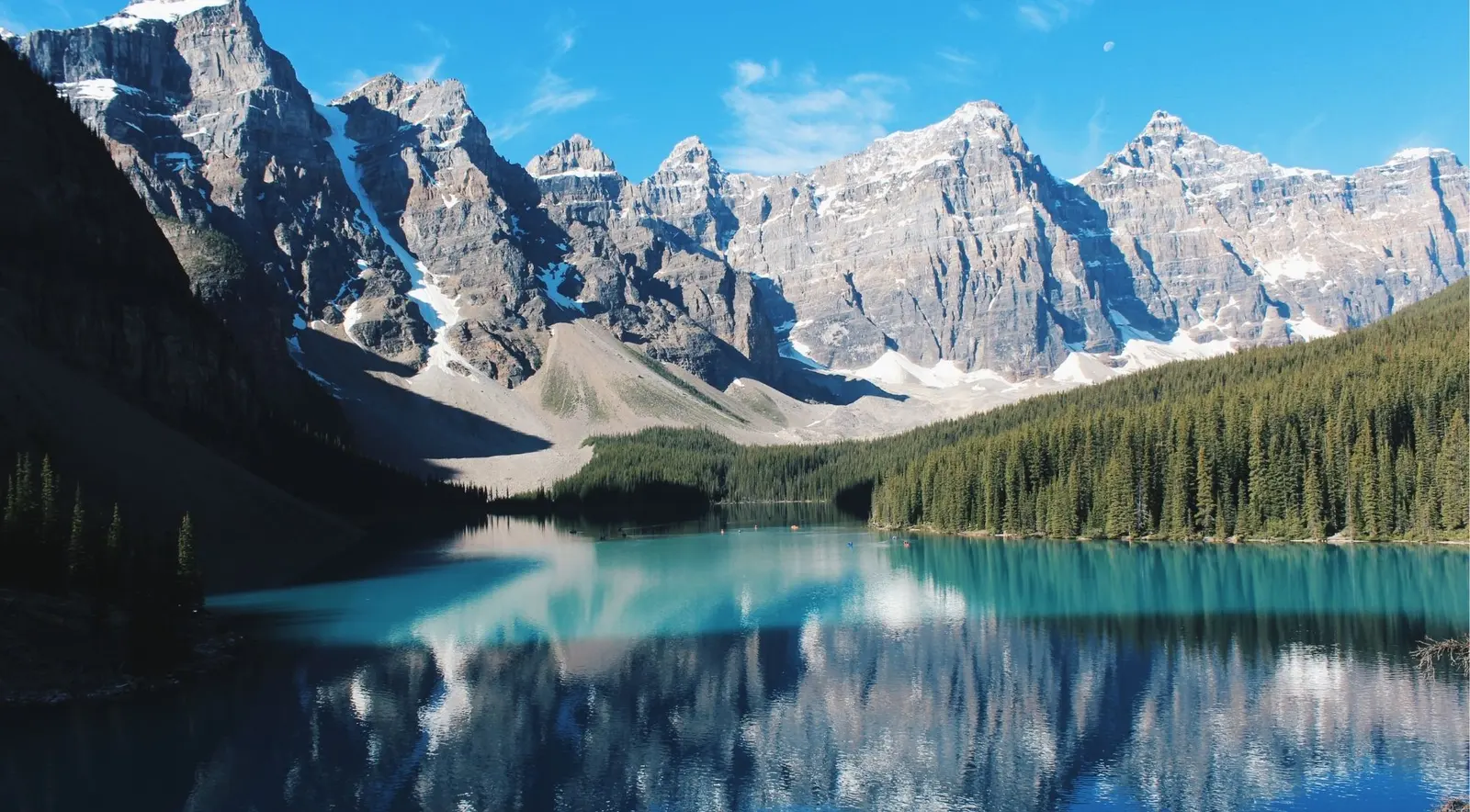
Turquoise Moraine Lake below the Valley of the Ten Peaks in Banff National Park
Things to do in Banff National Park · Complete overview · 2026

Things to Do in Banff National Park: The Complete Overview

Banff National Park is Canada's oldest, and it packs more world-class scenery and activity into one valley than almost anywhere on Earth — turquoise glacial lakes, gondola-topped peaks, grizzly-bear viewing, hot springs, and three ski resorts, all within a short drive of a walkable mountain town. This is the overview: everything worth doing, organised by iconic sights, activity type, season, and how long you've got.

Free park admission 19 Jun–7 Sep 2026 Moraine Lake is shuttle-only
  • 53 mammalsSpecies recorded in the park
  • 19 Jun–7 SepFree 2026 admission window
  • 3 resortsSkiBig3, roughly 7,700 acres
  • ~22°CTypical July valley high
  • 7–9 daysWhat locals suggest for the region
Start here · two things that reshape a 2026 trip

Start With This

Two things reshape a 2026 trip, so plan around them before anything else. Wildlife viewing runs through everything below, because it's arguably the park's most memorable draw — and if that's your priority, the deeper guides linked throughout will take you further.

Check live availability and prices on GetYourGuide. Pоwered by GetYourGuide.
Change 1

Paddling is now banned on several lakes

As of spring 2026, Parks Canada designated Moraine Lake, Lake Minnewanka and Bow Lake as Water Preservation Zones — no canoes, kayaks or paddleboards — to stop the spread of aquatic invasive species after whirling disease was confirmed in Lake Louise in 2025. Paddling is still fine at Lake Louise, Vermilion Lakes, Two Jack Lake, Johnson Lake, Emerald Lake and the Bow River.

Change 2

Park admission is free 19 June–7 September 2026

Under the Canada Strong Pass, there's no pass to buy for that window — it applies automatically. Regular fees apply outside it. See our park pass guide for the full picture.

Before you travel

Verify both of these

Water Preservation Zone designations, free-admission dates and seasonal opening dates for gondolas, cruises and ski resorts all change. Check Parks Canada and the operators before you build an itinerary around any of them.

Two zones, 45 minutes apart

The Iconic Sights

The must-sees cluster into two zones: around Banff town, and around Lake Louise about 45 minutes northwest.

Around Lake Louise. Lake Louise is the postcard — glacier-fed turquoise beneath Victoria Glacier, backed by the Fairmont Chateau. Walk the flat lakeshore, rent a canoe, or hike above it to the historic tea houses. Moraine Lake, in the Valley of the Ten Peaks, is if anything more dramatic — it once graced Canada's $20 bill. Private vehicles can't drive here; it's shuttle-only, and paddling is now banned. Full details in our Moraine Lake access guide. Peyto Lake, off the Icefields Parkway at Bow Summit, is the wolf-head-shaped lake from countless photos, reached by a short paved path.

Around Banff town. The Banff Gondola climbs Sulphur Mountain in about eight minutes to observation decks, dining, and a boardwalk to the Cosmic Ray Station historic site. Lake Minnewanka, the park's largest lake, offers a scenic cruise and excellent wildlife viewing — see our Lake Minnewanka guide. Johnston Canyon is a hugely popular walk on catwalks bolted to the canyon walls, past the Lower and Upper Falls. Bow Falls is a powerful cascade near the Fairmont; Vermilion Lakes gives mirror reflections of Mount Rundle and prime wildlife viewing; the Hoodoos are eroded rock spires on an easy trail. Surprise Corner frames the Fairmont Banff Springs, the "Castle in the Rockies," opened in 1888. Banff Avenue is the townsite's shopping-and-dining hub, and the Cave and Basin National Historic Site is the literal birthplace of Canada's national parks — the thermal springs whose 1883 discovery led to the park.

The Icefields Parkway (Highway 93) linking Lake Louise to Jasper is one of the world's great scenic drives, past lakes, glaciers and the Columbia Icefield.
Worth adding to your itinerary

Other Experiences You Might Enjoy

Most first-time visitors pair the headline sights with one guided day that removes the driving and parking problem entirely.

A Banff trip usually ends up being a handful of set-piece days: a sunrise run to Moraine Lake and Lake Louise, a walk through Johnston Canyon, a boat cruise on Lake Minnewanka, a full day up the Icefields Parkway to the Columbia Icefield, a crossing into Yoho National Park for Emerald Lake and Takakkaw Falls, or a dawn wildlife safari out of Banff or Canmore. The live options below update automatically for available experiences in and around Banff National Park, Lake Louise and the Bow Valley.

Banff's signature experience

Wildlife Viewing

Parks Canada records 53 species of mammal and over 260 birds in the park.

Grizzly and black bears, elk, bighorn sheep, deer, mountain goats, coyotes, and — rarely — wolves, moose and lynx all roam here.

The best places to look: the Bow Valley Parkway between Banff and Lake Louise, Vermilion Lakes Drive, the Lake Minnewanka Loop, and the top of Sulphur Mountain for bighorn sheep. The Lake Louise summer gondola is one of the best places anywhere to safely view wild grizzlies from above, with a free interpretive centre at the top.

Early morning and evening are best. Keep 30 metres from elk and deer, 100 metres from bears, and carry bear spray on trails. Guided wildlife tours and evening safaris improve your odds and add expert context — start with our wildlife tours overview, bear watching guide, or evening safari guide. For the roads themselves, see best places to see wildlife in Banff and our guide to bighorn sheep of the Canadian Rockies.

Pick your sport

Activities by Type

Hiking is the park's greatest strength, but it's a long way from the only thing on offer.

Hiking

Trails for every level. Easy: the Sulphur Mountain summit boardwalk, Johnston Canyon Lower Falls (1.2km one way), the flat Moraine Lake shoreline, the Fenland Trail near town. Moderate: Tunnel Mountain (a short, steep town classic), the Plain of Six Glaciers teahouse hike from Lake Louise (~10.6km round trip), Johnston Canyon to the Ink Pots, and Larch Valley above Moraine Lake — spectacular in late-September larch season. Hard: Sentinel Pass (continuing from Larch Valley), Cory Pass, Cascade Amphitheatre, and Healy Pass. Sunshine Meadows offers famously flat, flower-filled alpine walking reached by the Sunshine gondola.

Canoeing & kayaking

Quintessential Banff — with the 2026 caveats above. Rent at the Banff Canoe Club in town for the Bow River and Vermilion Lakes, or paddle Lake Louise and Emerald Lake. Moraine Lake, Lake Minnewanka and Bow Lake are closed to paddling.

Cycling

The paved Legacy Trail runs between Banff and Canmore (roughly 22km one way), an easy, scenic ride typically clear May–October. Add the Bow Valley Parkway and the town trails.

Via ferrata & climbing

The Mount Norquay Via Ferrata offers guided "iron road" climbing on five routes from 2.5 to 6 hours, no experience needed, with certified guides. Scrambling and mountaineering are there for the experienced.

Horseback riding

Banff Trail Riders operate from Warner Stables near downtown, from short river loops to multi-day backcountry trips.

Golf, fishing & rafting

Golf at the celebrated Fairmont Banff Springs course along the Bow River; fishing for lake trout on Lake Minnewanka; and white-water rafting on the Kananaskis or the bigger Kicking Horse near Golden, BC.

Alpine access without the climb

Gondolas and Sightseeing Rides

Beyond the year-round Banff Gondola, the Lake Louise summer sightseeing gondola offers easy alpine access with excellent grizzly viewing and a free interpretive centre. The Sunshine Village gondola reaches the meadows in summer and the resort in winter, and the Mount Norquay chairlift gives sightseeing, hiking access, the via ferrata, and mountaintop dining.

Canada's highest hot spring

Water and Relaxation

The Banff Upper Hot Springs is Canada's highest hot spring, at 1,585 metres on Sulphur Mountain, with the pool kept between 37 and 40°C and views of Mount Rundle. It's drawn visitors since 1886, sits in a restored 1932 bathhouse, and is open year-round — perfect after a hike or ski day.

The Lake Minnewanka cruise is a roughly one-hour interpretive boat tour, mid-May to mid-October. Several hotels and standalone spas round out the options.

A full second season

Winter Activities

Winter isn't the off-season in Banff — it's a different park with its own headline attractions.

The SkiBig3

Lake Louise, Sunshine Village and Mt. Norquay share a single lift pass across roughly 7,700 acres. Lake Louise is the largest ski resort in the Canadian Rockies; Sunshine has the longest, snowiest season (early November into late May); Mt. Norquay is smallest but closest to town and the only one with night skiing.

Beyond downhill

Cross-country skiing, snowshoeing, ice skating on the famous rink in front of the Chateau Lake Louise (lit at night), the Johnston Canyon icewalk past frozen waterfalls, dog sledding, ice climbing, fat biking, sleigh rides, and tube parks.

Winter events

Signature events include the Lake Louise Ice Magic Festival and Banff SnowDays.

For rainy days or a change of pace

Cultural and Indoor Activities

The Whyte Museum of the Canadian Rockies covers art and mountain history, the Buffalo Nations Luxton Museum covers Indigenous heritage, and the Banff Park Museum — a 1903 log building — is the oldest natural history museum in western Canada. The Cave and Basin tells the park's origin story, and the Banff Centre for Arts and Creativity hosts concerts and festivals year-round.

For Indigenous experiences, Mahikan Trails leads Cree-guided medicine walks near Cascade Ponds. Seasonal highlights include the Banff Farmers' Market and Christmas markets.

Bigger than the town's size suggests

Food and Drink

Notable spots include The Bison (regional Canadian cuisine and Alberta bison), Park Distillery (a distillery restaurant), Three Bears Brewery (craft brewery with a retractable roof), and Sky Bistro atop the gondola. Casual staples like poutine and BeaverTails are everywhere, food and brewery tours run in town, and the Fairmont offers fine dining. Craft-beer fans can follow the Banff Ale Trail.

Build the itinerary

How Long Do You Need?

One day, a long weekend, or a full week — what actually fits into each.

One day

Ride the Banff Gondola early, walk Bow Falls and Surprise Corner, bus or shuttle to Lake Louise for the lakeshore, and finish with a hot-springs soak. If time allows, add a dusk wildlife drive on the Bow Valley Parkway.

A weekend / 3 days

Add Moraine Lake (via shuttle), Johnston Canyon, a Lake Minnewanka cruise, and one good half-day hike like the Plain of Six Glaciers or Lake Agnes tea house.

A week

Add the full Icefields Parkway (Bow Lake, Peyto Lake, the Columbia Icefield), a big alpine hike like Sentinel Pass or Sunshine Meadows, the via ferrata or a horseback ride, and day trips to Yoho and Kananaskis. Locals suggest 7–9 days to see the region properly.

When to come — and what July is really like

By Season — and Banff in July

Summer (June–September) is peak: all trails open, warm days, vivid lakes, everything running. Winter (December–March) is for skiing and snow play. Shoulder seasons mean fewer crowds — autumn brings golden larches in late September, one of the most beautiful times to visit.

Banff in July specifically is the busiest month. Expect warm valley days around 22°C (cooler and windier up high), long daylight, full wildflower bloom, and every gondola, trail and cruise open — but also peak crowds, peak prices, and car parks full by mid-morning at Lake Louise, Moraine Lake, Johnston Canyon and the gondola. Start early, book accommodation and shuttles well ahead, and walk a little farther than everyone else to find quiet. For a month-by-month view built around animal activity, see our best time for Banff wildlife guide.

If wildlife is the reason you're coming

One Guided Day Removes the Driving, the Parking and the Guesswork

Everything above is doable independently. A guided day is worth it when the alternative is a 5am alarm, a full car park and no idea where the animals are.

Our wildlife pick · 95% sightings

Banff Highlights & Wildlife: Award-Winning Small Group Tour

From $105 ★ 4.4 (300 reviews) Free 24-hour cancellation

Your guide builds each day's route around recent wildlife reports and the weather, working the corridors this guide keeps pointing at — Lake Minnewanka, Two Jack Lake, Bow Falls, Surprise Corner — with a maximum of 12 guests and a panoramic-window vehicle. Rating and review count shown as published by GetYourGuide.

Check availability & prices

Free cancellation. Small group, 95% sightings. Secure booking via GetYourGuide.

Transit, parking and the shuttle rule

Getting Around

Roam Transit connects Banff, Canmore, Lake Louise and key attractions. Parking in town and at popular sights is limited, so transit and shuttles are strongly recommended — and Moraine Lake has no private-vehicle access at all.

Banff town sits about 45 minutes southeast of Lake Louise; Canmore is just outside the east gate, about 20 minutes away. Our Banff tours guide covers the guided-vs-self-drive-vs-transit decision in depth, and our guided vs self-driving comparison puts numbers on it.

Worth crossing a park boundary for

Nearby Day Trips

Yoho National Park

Over the divide in BC — Emerald Lake, Takakkaw Falls and the Natural Bridge.

Kootenay

Highway 93 South leads to Radium Hot Springs.

The Icefields Parkway

Climbs to the Columbia Icefield and its glacier experiences — a full day in itself.

Kananaskis Country

A separate provincial pass. Hiking, rafting and quieter wildlife viewing.

Canmore

Just outside the gate, with its own dining and trails.

Golden, BC

Big rafting on the Kicking Horse.

Common questions

Things to Do in Banff: FAQs

The questions travellers ask most when they're working out what to fit in.

What are the top things to do in Banff?

The essentials are the Banff Gondola, Lake Louise, Moraine Lake (by shuttle), Johnston Canyon, the Icefields Parkway, a Lake Minnewanka cruise, wildlife viewing on the Bow Valley Parkway, and a soak in the Upper Hot Springs.

How many days do you need in Banff?

At least three for the highlights; a week is better and lets you add the Icefields Parkway, big hikes, and day trips. Locals suggest 7–9 days to see the region properly.

What is there to do in Banff in one day?

Gondola early, Bow Falls and Surprise Corner, Lake Louise for the lakeshore, hot springs to finish — plus a dusk wildlife drive if time allows.

Is Banff worth visiting in July?

Yes — everything is open, the lakes are vivid and the days are long — but it's the busiest, priciest month, and car parks fill by mid-morning. Start early and lean on transit.

Can you see wildlife in Banff?

Very much so — 53 mammal species live here. Drive the Bow Valley Parkway at dawn or dusk, ride the Lake Louise gondola for grizzlies, or take a guided wildlife tour.

What can you do in Banff in winter?

Ski the SkiBig3 resorts, skate the Lake Louise rink, walk the Johnston Canyon icewalk, go dog sledding or snowshoeing, and soak in the hot springs.

Do you need a car in Banff?

Not necessarily — Roam Transit and shuttles cover most sights, and Moraine Lake requires the shuttle regardless. A car helps in shoulder season or for flexible hiking.

What's the best free thing to do in Banff?

Wildlife viewing on the scenic drives, walking the town and Bow River trails, Vermilion Lakes at sunset, and — from 19 June to 7 September 2026 — park admission itself.

Start planning

See the Headline Sights in One Day — Without Driving Any of It

If wildlife is your priority, begin with our wildlife tours overview and best places to see wildlife. For everything else, the Banff tours guide covers how to actually get around and what to book.

  • Emerald Lake, Moraine Lake, Lake Louise and Johnston Canyon in one run
  • National park pass and Moraine Lake access included
  • Free cancellation on most tours — book with confidence
Browse Banff Tours

We may earn a commission from bookings made through our links, at no extra cost to you. See our affiliate disclosure.