- MinnewankaBest overall winter drive for bighorn sheep
- Vermilion LakesEasiest wildlife stop near town
- Nov–MayWestern Minnewanka Loop closed
- 30 m / 100 mMinimum distances, hoofed animals / carnivores
- 1 Nov–31 MarWinter tires or chains on the Icefields Parkway
Look in the Low Valleys and Along the Scenic Roads Near Town
In winter, look for wildlife in Banff's lower-elevation valleys and along the scenic roads around town, not on remote high-mountain trails. Start with Lake Minnewanka Road for a chance of bighorn sheep, Vermilion Lakes Road for quiet wetland and valley-edge watching, and Mount Norquay Road for open hillsides where sheep are sometimes visible. If the roads allow, add a drive along the Bow Valley Parkway (Highway 1A) to scan meadows and forest edges for elk and deer.
Rather not drive in snow? The calendar above books the Banff Wildlife and Sightseeing Minibus Tour (from US$63, ★ 4.6 from 159 reviews), a year-round morning tour that covers Lake Minnewanka and the viewpoints near town from a heated vehicle.
No place in Banff National Park guarantees wildlife. Elk can be easy to find one day and gone the next. Bighorn sheep sometimes use slopes near roads, but they are wild animals, not a scheduled attraction. Wolves and moose live in the wider park but are much less predictable, and bears normally spend most of the winter in their dens, although one can occasionally be active.
The good news: you don't need to hike through deep snow to enjoy Banff's winter landscapes or to have a chance of seeing animals. Several good viewing areas can be reached by car, with optional short walks at designated viewpoints. This guide sticks to places you can reach in November, December, January and February, leaving out summer-only roads and backcountry habitat.
Quick answer: for a short, easy outing from Banff town, try Vermilion Lakes Road plus Mount Norquay Road, or the open eastern side of Lake Minnewanka Road. For a longer scenic drive, choose the Bow Valley Parkway after checking the weather and road conditions. Watch responsibly instead of trying to get close to an animal.
Access update, 7 November 2026: Parks Canada lists the western part of the Minnewanka Loop and the Banff Springs Golf Course Road as closed to driving from November to May. The eastern Lake Minnewanka road, which reaches Cascade Ponds, Johnson Lake, Two Jack Lake and Lake Minnewanka, stays the normal winter approach, subject to temporary conditions. Other restrictions and emergency closures can change at short notice, so check Parks Canada's seasonal closures and current bulletins before you go.
Best Winter Wildlife-Viewing Places in Banff
| Place | What to look for | Winter access | Walking needed? | Best reason to go |
|---|---|---|---|---|
| Lake Minnewanka Road (eastern access) | Bighorn sheep; occasional deer or other wildlife | Normally open via the eastern road; western loop closed for the season | No, or very short viewpoint walks | The best mix of mountain scenery and sheep habitat |
| Mount Norquay Road and lookout | Bighorn sheep on open hillsides; occasional other mammals | Serves the ski area in winter; check conditions | No, or a short walk at a proper turnout | Open slopes and wide valley views |
| Vermilion Lakes Road | Deer, birds, possibly elk or other passing animals | Year-round destination, weather permitting | No; optional short roadside viewpoints | The closest quiet wildlife-and-photo outing from town |
| Bow Valley Parkway (Highway 1A) | Elk, deer; rarely predators | Generally a year-round road, with seasonal restrictions and weather disruption | None for the drive; optional designated stops | A longer, slow valley wildlife drive |
| Banff town and the Bow River | Elk, deer, birds | Easy access from town | Optional, depending on the stop | When you have very little time |
| Cascade Ponds, Johnson Lake and Two Jack Lake | Occasional deer, birds or bighorn sheep nearby | Usually reached from the eastern Minnewanka access | Short optional walks only | Flexible stops on a scenic winter outing |
| Lake Louise and its corridor | Occasional deer or other wildlife; birds depending on conditions | Main roads and the lakeshore are winter destinations; closures and parking vary | Optional short lakeshore walk | A scenic extension, not a high-probability wildlife stop |
"Normally open" doesn't mean snow-free, risk-free or open today. Check 511 Alberta and Parks Canada's driving advice before you leave. Never stop in a driving lane or enter a closed area to look for animals.
Other Experiences You Might Enjoy
Guided ways to see the same valleys without driving yourself.
If you would rather leave the winter driving to someone else, guided wildlife and sightseeing tours cover Lake Minnewanka, Vermilion Lakes, the Hoodoos and Bow Falls from Banff, and longer days run along the Bow Valley Parkway to frozen Lake Louise. The live options below update automatically for experiences in and around Banff National Park.
Lake Minnewanka Road: The Best Winter Drive for a Chance of Bighorn Sheep
Lake Minnewanka is one of the most practical wildlife-and-scenery outings close to Banff. Open rocky hillsides, forest edges and the lower Bow Valley give bighorn sheep places to spend the winter. The landscape rewards the trip even when no animals show: snow on the slopes, pale winter light over the lake and wide mountain views.
Bighorn sheep are the main reason wildlife watchers come here. They don't hibernate, and in winter they use exposed slopes and lower ground where food is easier to reach than under deep snow. You may see them close to the road, but not on every drive.
Can you drive the whole Lake Minnewanka Loop in winter?
No, and this is the most important thing to know before you set off. The 24 km scenic Minnewanka Loop can't be driven in full in winter: Parks Canada closes its western section from November to May to protect a wildlife corridor. Banff & Lake Louise Tourism says the rest of the road still reaches Cascade Ponds, Johnson Lake, Two Jack Lake and Lake Minnewanka.
Use the eastern access from the Trans-Canada Highway and follow the road signs. Don't plan a full circle from a summer map, and if your navigation app sends you towards a closure, turn back and take the open, signed route. Official reading: Drive the Minnewanka Loop, Banff & Lake Louise Tourism.
The best way to explore the area
- Leave Banff with enough daylight for an unhurried drive.
- Follow the signed, open eastern access towards the Minnewanka lakes.
- Scan open slopes from safe, designated viewpoints, and keep your eyes on the road while driving.
- Stop at Two Jack Lake or Lake Minnewanka for the scenery if access is open and parking is safe.
- Return the same way you came; the closed part of the loop stays closed.
Don't pull onto narrow, snow-covered shoulders. If sheep are on the road, slow down safely, stay in your vehicle, give them room and drive on when it is safe. Never get out to photograph sheep at close range.
Best for: couples, families, first-time visitors and photographers who want winter scenery with a realistic chance of bighorn sheep.
Not best for: anyone expecting a guaranteed animal or hoping to visit every stop on the summer loop.
For more on the scenery and stops, see our Lake Minnewanka and Two Jack Lake guide and our bighorn sheep guide.
Mount Norquay Road: Open Slopes and a Short Scenic Wildlife Outing
Mount Norquay Road climbs above Banff town towards the Mount Norquay ski area, past open stretches of mountainside. It is a good place to look for bighorn sheep, especially where the slopes are exposed, and a fine overlook of Banff, the Bow Valley and the surrounding peaks even if you see no animals.
There is a well-known lookout on the access road, sometimes called the Green Spot, but a good view is no licence to stop wherever it suits you. Use only a legal, safely accessible turnout, and keep away from blind bends and snowbanks. In heavy snow or ice, a mountain access road is a poor choice for an inexperienced winter driver.
What wildlife might you see?
- Bighorn sheep: the main animal to look for on the nearby open slopes, though sightings stay unpredictable.
- Deer or elk: possible on the lower sections and in nearby valley habitat; nothing to count on.
- Birds: ravens and other hardy mountain birds are often easier to spot than mammals.
There is no reason to climb an unsafe hillside or chase distant animals for a better look. Binoculars do far more for you than walking closer.
When is Mount Norquay Road a good choice?
Choose it for a short drive from Banff, especially if you want a panoramic viewpoint and a chance of sheep in one outing. It pairs well with Vermilion Lakes, since both are close to town. If mountain winter driving makes you nervous, a guided winter sightseeing and wildlife tour is the easier option.
Best for: brief stops, snow photography and visitors keen on bighorn sheep.
Winter caution: road conditions, ski-area traffic and parking all change. Keep a safe stopping distance, use winter tires and avoid risky roadside manoeuvres.
Vermilion Lakes Road: The Easiest Wildlife-Watching Spot Near Downtown Banff
Vermilion Lakes is one of the simplest additions to a winter day in Banff. The chain of lakes sits just west of town, with wetland, trees, open water in some conditions and Mount Rundle's familiar outline beyond. You may not see a large mammal, but the mix of habitats makes it a rewarding place to watch quietly for deer, birds and other wildlife.
Banff & Lake Louise Tourism lists Vermilion Lakes as a year-round destination and suggests early or late visits for a chance of wildlife. It also notes that moose are sometimes seen around the lakes. Treat that as a possibility, not a reason to expect a moose.
The big advantage here is convenience. You can enjoy the setting without a strenuous walk, and it fits easily into half a day in Banff without planning a major excursion.
How to visit in winter
- Drive in on Vermilion Lakes Road, watching for signs, parked cars and snow or ice on the narrow road.
- Use designated parking or legal pullouts; don't stop suddenly for a photo.
- Bring binoculars and scan the shorelines, woodland edges and open ground in the distance.
- If you walk, stay on maintained or permitted areas, which can be slippery.
- Never walk onto the lake ice because other people have. Ice thickness and strength vary.
Morning light on Mount Rundle can be beautiful, but a visit later in the day is often more comfortable for families in very cold weather. Wildlife keeps no timetable, and the best light for photos is no guarantee of animals.
Best for: travellers short on time, low-walking plans, winter landscape photography and a quiet start to the day.
Not best for: anyone hoping for a good chance of a wolf, a moose or one particular large mammal.
Official destination information: Vermilion Lakes, Banff & Lake Louise Tourism.
Bow Valley Parkway: The Best Longer Drive for Elk and Deer Habitat
The Bow Valley Parkway (Highway 1A) links the Banff and Lake Louise areas as a slower, scenic alternative to the Trans-Canada Highway. It runs through lower-elevation habitat that wildlife uses in winter, especially sheltered forest edges and valley slopes. If you have more time, it is a good road for possible elk and deer as well as mountain scenery.
Banff & Lake Louise Tourism describes the parkway as a year-round scenic drive. Parks Canada explains that montane habitat, the lower ground around Banff and Lake Minnewanka, often has less snow than the alpine and matters for grazing animals and the predators that follow them.
Does the Bow Valley Parkway close in winter?
- The parkway itself is generally open year-round, weather and temporary restrictions permitting.
- Its 17 km eastern section has a yearly overnight wildlife closure from 1 March to 25 June, 8 p.m. to 8 a.m. That falls just outside November to February, but it matters if your trip runs into March.
- Any road can be affected by snowfall, wildlife management or a temporary closure.
Check Parks Canada's current restrictions list before you go; an older travel blog may be out of date. Our Bow Falls and Bow Valley Parkway guide covers the route's stops.
How to look for wildlife responsibly
The best approach is slow, attentive, legal driving; spotting animals never comes before watching the road. Keep to the speed limits, let the driver concentrate and have passengers scan the clearings. Use established viewpoints for longer stops. Animals can cross suddenly, and where one appears, others may follow.
A wolf is possible in Banff National Park, but this is not a predictable wolf-watching route. A moose in the Bow Valley is possible too, but uncommon enough that it shouldn't be the reason for the drive.
Best for: visitors with a spare half-day, confident winter driving and an interest in the Bow Valley beyond central Banff.
Not best for: tight schedules, poor road conditions or anyone expecting guaranteed elk or wolves.
Our wider guide to the best places to see wildlife in Banff gives the year-round picture.
Banff Town and the Bow River: Wildlife Without a Special Drive
You don't always have to leave town to see wildlife. Elk and deer may turn up in and around Banff, including the open spaces near the Bow River and nearby green areas, and birds stay busy near town even on cold days. A walk by the river or a short visit to a viewpoint can add some wildlife to a relaxed winter day.
Animals in town are not tame. Elk in particular can be dangerous even when they look calm, and a quiet, park-like setting doesn't make it safe to approach them. Parks Canada specifically warns visitors not to mistake town elk for tame animals; our elk in Banff guide explains why.
Where can you stop?
Choose public viewpoints, established paths and legal parking. Bow Falls is a pleasant landscape stop, best thought of as a scenic stop with possible wildlife; no particular species is reliable there. A walk by the Bow River is a nice low-effort outing, but it is no substitute for a guided wildlife tour.
Without a car, check the current local transit and walking conditions, and keep any walk short when it is very cold. Icy paths may need traction cleats. Our getting around Banff guide covers the buses.
Best for: visitors staying in central Banff, parents with children and anyone with only an hour or two.
Not best for: tracking down large predators or ticking off a species list.
Cascade Ponds, Johnson Lake and Two Jack Lake
These three are easy additions to the open eastern Lake Minnewanka route, depending on road and parking conditions. Each has different winter scenery and a chance to scan the nearby forest edges, clearings and hillsides.
- Cascade Ponds: a pretty short stop for mountain views and careful watching of the valley around it.
- Johnson Lake: a peaceful natural setting; in winter, conditions differ from summer, so don't assume a trail or a frozen surface is safe.
- Two Jack Lake: big views of the surrounding peaks and a natural stop on the way to Lake Minnewanka.
None of them is a dependable place for elk, moose or sheep. They are there to make a winter wildlife drive enjoyable even without a sighting. Be ready to skip a stop if its parking is unploughed, full or closed.
Best for: several scenic stops in one short drive.
Access reminder: reach these stops by the signed open route. The western Minnewanka Loop stays closed to driving for the season.
Lake Louise: Beautiful in Winter, but Not the First Wildlife Stop
Lake Louise is one of Banff National Park's most famous winter landscapes, and you may see wildlife on the way there. But if elk or bighorn sheep are the main goal, the lower Bow Valley and the roads closer to Banff are the more practical place to start.
The lake sits higher, where the snow and cold are more intense. Animals aren't absent, but most winter visitors come for the frozen lake and the mountain setting. Expect the scenery to be the main event and count any wildlife as a bonus.
If you combine Lake Louise with the Bow Valley Parkway, leave room for winter driving and short daylight. Moraine Lake Road is closed to personal vehicles year-round, so Moraine Lake is not a self-drive winter stop; our Moraine Lake access guide has the details.
Best for: a full day of winter scenery with an incidental chance of wildlife.
Not best for: a short, dedicated animal-spotting trip from Banff town.
Places Not to Include on a Winter Wildlife Drive
Knowing where not to drive is half of a good winter plan.
The western Minnewanka Loop
Closed to driving from November to May to protect a wildlife corridor. The eastern access is the winter option, and a summer "full loop" plan doesn't work in these months.
Banff Springs Golf Course Road
Parks Canada lists it as closed to driving from November to May. Some older wildlife-driving guides suggest it for elk and other animals, but it is not an open winter driving route.
Moraine Lake Road
Personal vehicles are not allowed, year-round. Don't plan a winter drive to Moraine Lake or assume the summer access arrangements carry on through the winter.
Johnston Canyon: closed until 11 December 2026
Johnston Canyon is mainly a scenic icewalk, not a wildlife hotspot. Parks Canada has closed the Johnston Canyon trail and day-use area, including the P1 parking lot and washrooms, from 13 October to 11 December 2026 for construction work, so don't plan the usual lower-canyon visit in that window. Check the official closure bulletin before adding it to a winter drive. For later dates, the Johnston Canyon icewalk (★ 4.8 from 284 reviews) supplies ice cleats and a guide.
The Icefields Parkway as an improvised wildlife outing
The Icefields Parkway is spectacular, but it is a far more demanding winter road. On Highway 93N, winter tires or chains are required from 1 November to 31 March, or whenever the road is covered in snow or ice. Parks Canada warns of limited winter services, early darkness and possible closures. It is no road for a last-minute detour to look for bears or sheep. See Parks Canada's driving advice, its Icefields Parkway conditions and our Icefields Parkway guide.
Best Short Winter Wildlife Routes From Banff
These are suggested sightseeing routes, not promises that animals will appear. Driving times vary with snow, traffic and how long you stop, so don't plan them to the minute.
Option A: an easy 2–3-hour outing near Banff
Banff town → Vermilion Lakes Road → Mount Norquay lookout (if safe) → Banff town
- Set off after sunrise, so you can see the road conditions and the wildlife clearly.
- Visit Vermilion Lakes for quiet scenery and a chance of deer or birds.
- If conditions allow, drive Mount Norquay Road and use a safe, designated viewpoint to scan the open hillsides for sheep.
- Head back to Banff without adding an unnecessary mountain detour.
Choose this route if you are travelling with children, are short on time or want a low-walking plan. If the Norquay road is icy or visibility is poor, spend longer at the viewpoints in town.
Option B: a half-day Lake Minnewanka outing
Banff town → signed eastern Minnewanka access → Cascade Ponds, Two Jack Lake and Lake Minnewanka as access allows → back by the open route
- Drive to the eastern access; the summer loop is closed.
- Watch for bighorn sheep on the nearby slopes, without stopping dangerously.
- Use one or two legal scenic stops for photos and a warm drink.
- Come back in daylight, leaving time for a slower drive if it snows.
Choose this route if you want more bighorn sheep habitat and dramatic lake scenery. If all you see is snow and mountains, the drive should still feel well spent.
Option C: a longer Bow Valley Parkway drive
Banff → open sections of the Bow Valley Parkway → established viewpoints → back, or on towards Lake Louise depending on conditions
Use this when the roads are good, you have daylight to spare and you are comfortable driving in winter. Check for temporary restrictions, never drive into a closed section, and cut the trip short if the weather turns.
Should You Drive Yourself or Book a Banff Winter Wildlife Tour?
Both can work; they solve different problems.
| Self-drive winter wildlife outing | Guided winter wildlife or sightseeing tour |
|---|---|
| Flexible timing and choice of stops | A guide handles the route and explains what you see |
| Best if you already have a winter-ready vehicle | Useful without a car or if snow driving is new to you |
| You check the closures and conditions yourself | The operator usually handles routing, but check what is included |
| You decide how long to wait at safe viewpoints | The itinerary and time at stops may be more fixed |
| No guaranteed sightings | Also no guaranteed sightings |
For help choosing a tour, see our best Banff winter wildlife tours and our comparison of Banff winter sightseeing and wildlife tours. For the animals themselves, read wildlife in Banff in winter.
The simplest guided option runs all year: Discover Banff Tours' three-hour morning tour, sold on GetYourGuide as the Banff Wildlife and Sightseeing Minibus Tour. It covers Lake Minnewanka and the viewpoints near town, which overlaps with Options A and B above. Some better-known safaris, such as the Evening Wildlife Safari, run only from April to October, and no ticket guarantees wildlife.
Banff: Wildlife and Sightseeing Minibus Tour
The winter version of Option B without the driving: hotel pickup in Banff, Lake Minnewanka, Bow Falls and the Hoodoos in three hours, and a guide who knows which slopes the sheep use.
Free cancellation up to 3 days before. Secure booking via GetYourGuide.
Which Animals Are Realistic to Look for in Winter?
Winter wildlife watching is more enjoyable when your expectations match how the animals behave.
| Animal | Winter expectation | Where this guide helps most |
|---|---|---|
| Elk | Active year-round, but may be hidden or elsewhere on any given day | Bow Valley habitat, open spaces around town |
| Bighorn sheep | Active in winter; sometimes seen on accessible rocky or open slopes | Lake Minnewanka Road and the Mount Norquay area |
| Deer | Possible on wooded edges and in the lower valleys | Vermilion Lakes, Bow Valley Parkway, the edges of town |
| Birds | Often the easiest wildlife to watch well from a distance | Vermilion Lakes, waterways and forest edges |
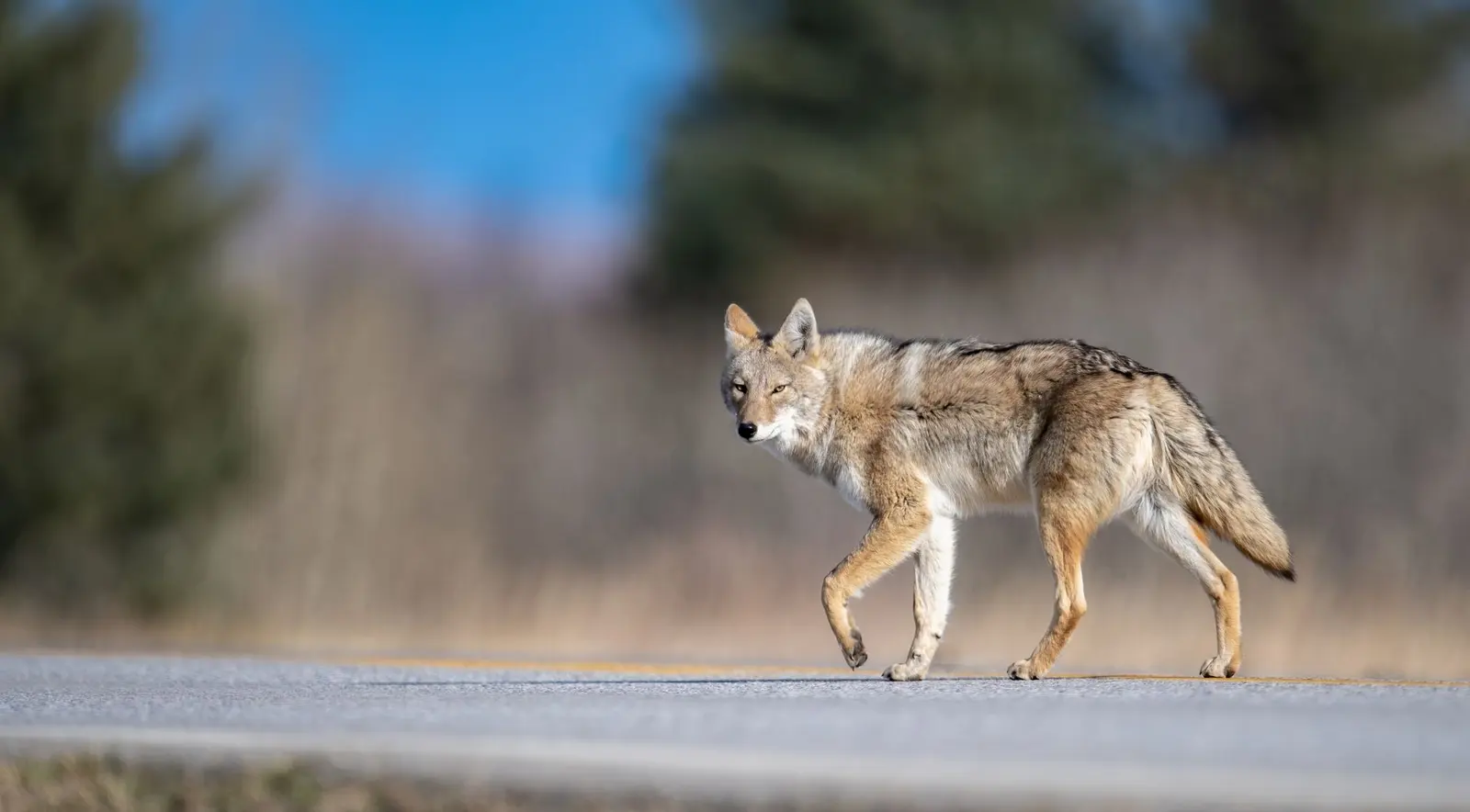
| Coyotes | Active but unpredictable; watch from a distance | Various low-valley habitats |
| Wolves | Present in the park, but sightings are rare | No reliable public spot or guaranteed route |
| Moose | Possible but uncommon in most places visitors can reach | Wetland and woodland habitat, with no dependable public viewpoint |
| Bears | Usually denning for much of the winter; occasionally active | Don't plan a November to February wildlife drive around a bear |
No route deserves the title "the best place to see wolves". Focus on the animals you can realistically hope for, and on a winter drive you will enjoy even without them. Our animals of Banff guide introduces the full cast.
The Best Time of Day to Look for Wildlife in Winter
Daylight matters more than the exact hour. Many large mammals are most active around dawn and dusk, but December and January days are short and the roads can be icy at both ends of them. A very early start is no better if it puts you on an unfamiliar mountain road in the dark.
For most visitors the sensible plan is to set off shortly after sunrise, drive slowly and be back while there is plenty of light. If you prefer late-afternoon light, stay close to town and leave time to get back safely.
A local guide may know where animals have been seen lately, but there is no daily schedule for wildlife in Banff.
Winter Driving Essentials for Wildlife Watchers
Run through this before you leave your hotel:
- Roads: check 511 Alberta for conditions and closures.
- Restrictions: read Parks Canada's seasonal closures and its important bulletins.
- Vehicle: use a winter-ready vehicle with proper winter tires. Tire or chain rules apply on some highways, including the Icefields Parkway.
- Daylight: finish the drive in daylight whenever you can.
- Fuel and supplies: carry warm layers, water, snacks, a charged phone, spare washer fluid and basic emergency kit.
- Route choice: skip narrow or icy roads if you aren't confident driving on snow.
- Parking: stop only where it is legal and safe, and never block traffic or a snowplough.
- Wildlife: stay in the vehicle if an animal is beside the road, and don't start a wildlife jam.
You need a valid Parks Canada park pass for a visit and to drive the Bow Valley Parkway or the Icefields Parkway. Driving straight through the park on the Trans-Canada Highway without stopping is the exception; a wildlife outing is not. See our Banff National Park pass guide or Parks Canada's pass page before you go.
How Far Should You Stay From Wildlife in Banff?
Parks Canada requires you to give animals space. Its wildlife-viewing distances are:
| Wildlife | Minimum distance |
|---|---|
| Elk, deer, bighorn sheep and moose | 30 metres (about three bus lengths) |
| Bears, wolves, cougars and coyotes | 100 metres (about ten bus lengths) |
Don't approach, follow, feed or entice wild animals. If an animal moves away because of you, you are too close. Use binoculars or a zoom lens for photos.
For animals beside the road: slow down safely, stay in your vehicle and keep going. If there is a safe, legal place to pause, keep it brief and move on if traffic starts to build. Parks Canada specifically warns against roadside wildlife jams.
Official rules: give wildlife space, Parks Canada and elk safety.
Wildlife Photography Tips for Snowy Banff Roads
The best winter wildlife photo is often a wide frame showing the animal in its surroundings, not a close-up that meant disturbing it. Winter makes photography harder, but snow also gives lovely contrast against dark fur and mountain rock.
- Bring a telephoto lens or binoculars. Don't walk up to animals to fill the frame.
- Watch the exposure. Bright snow can fool a camera into darkening the scene, so check the histogram and adjust exposure compensation.
- Use a fast enough shutter speed for moving animals, such as sheep or deer walking near the road.
- Keep spare batteries warm in an inside pocket.
- Never set up a tripod on a road shoulder. Pick a safe, designated viewpoint and follow the park rules.
- Photograph the landscape too. Vermilion Lakes and the Lake Minnewanka area make superb pictures on their own.
- Leave the drone at home. Recreational drones are not allowed in Parks Canada national parks without authorization.
For locations through the year, see our best photography spots in Banff; to compare guided trips and workshops, read our Banff winter wildlife photography tours guide.
Where to See Wildlife in Banff in Winter: FAQs
What visitors ask most about winter wildlife viewing, roads and closures.
Where is the best place to see wildlife in Banff in winter?
For an easy winter outing, Lake Minnewanka Road and Mount Norquay Road are good places to look for bighorn sheep. Vermilion Lakes is the most convenient spot for quiet wildlife watching near town, and the Bow Valley Parkway is a longer drive through habitat used by elk and deer. None of them guarantees a sighting.
Where can I see elk in Banff in December or January?
Elk may be seen in the Bow Valley, including lower-elevation habitat, open spaces around town and sometimes along the Bow Valley Parkway. Where they are changes with the weather and the food available. Keep at least 30 metres away, even if the elk seem used to people.
Are bighorn sheep easy to see near Lake Minnewanka in winter?
Bighorn sheep are one of the main winter animals to look for on the area's open slopes, and visitors do sometimes see them beside or near the road. They are not guaranteed, and you should never stop illegally or walk towards an animal to improve your chances.
Is the Lake Minnewanka Loop open in December, January and February?
Only partly. The western section is closed to driving from November to May. The eastern route normally gives access to Cascade Ponds, Johnson Lake, Two Jack Lake and Lake Minnewanka. Always check the latest signs and closure notices.
Is the Bow Valley Parkway open during the winter?
Generally yes, subject to snow, temporary closures and posted restrictions. The overnight wildlife closure on its eastern 17 km section runs from 1 March to 25 June, not in December or January. Other seasonal restrictions can apply at other times of year, so check the dates for your trip.
Can I see wildlife in Banff without hiking?
Yes. Several viewing places can be reached on scenic drives, including Vermilion Lakes Road, Mount Norquay Road, the open part of Lake Minnewanka Road and the Bow Valley Parkway. A vehicle-based guided tour is another option if you don't want to drive in snow.
Can you see wolves or moose in Banff in winter?
Both live in the wider park, but neither is an animal to expect on a short public sightseeing drive. A chance encounter can happen, but no viewing spot or tour can promise one. Never approach a large mammal.
Can you see bears in Banff in February?
Most bears are denning for much of the winter, although a bear can occasionally be active. February is not a sensible month for a bear-focused trip, so choose outings that focus on active winter wildlife and mountain scenery.
Can I drive to Moraine Lake in winter?
No. Moraine Lake Road is closed to personal vehicles year-round, and the summer visitor transport doesn't run in the same way in winter. It doesn't belong in a November to February self-drive wildlife plan.
Do I need winter tires to drive around Banff?
A winter-ready vehicle is strongly recommended everywhere in the area. Parks Canada requires winter tires or chains on Highway 93N (the Icefields Parkway) and Highway 93S in Banff from 1 November to 31 March, or whenever those roads are covered in snow or ice. Check the current rules and the condition of any road you plan to use.
Do I need to buy a Banff National Park pass for a wildlife drive?
Yes. You need a park pass for a wildlife-viewing visit and for driving the Bow Valley Parkway. The exception for driving straight through on the Trans-Canada Highway without stopping doesn't cover sightseeing stops or wildlife outings.
What is the safest way to photograph animals on a Banff road?
Stay in your vehicle when wildlife is near the road, don't create a traffic hazard, and use a zoom or telephoto lens. Pause only where it is legal and safe, and move on if a queue starts to form. Parks Canada asks you to stay 30 metres from elk, deer, sheep and moose and 100 metres from bears, wolves, cougars and coyotes.
Start Close to Banff and Stay Flexible
With only two or three hours, choose Vermilion Lakes and Mount Norquay Road, or an easy out-and-back drive on the open eastern Lake Minnewanka road. Both keep you close to town and combine good scenery with a chance of wildlife.
With half a day or more, add the Bow Valley Parkway if the roads are clear and you are comfortable driving in winter. Leave time to be back before dark. The best wildlife moment is not the one with the most animals; it is the one where you watch them without changing what they do.
If snow driving sounds stressful, look at our Banff winter wildlife tour comparison. A guide takes care of the roads and explains the ecology while you enjoy the view, although no operator can guarantee wildlife. For wider winter planning, read what animals you can see in Banff in winter and our guide to Banff winter sightseeing and wildlife tours.
Sources and Further Reading
Road and closure details were checked on 7 November 2026 and can change at short notice. These official pages are the authority on closures and safety.
- Parks Canada: Banff seasonal closures and restrictions (western Minnewanka Loop, golf course road, Moraine Lake Road and Bow Valley Parkway)
- Parks Canada: important bulletins (temporary wildlife, avalanche and construction closures)
- Banff & Lake Louise Tourism: drive the Minnewanka Loop
- Banff & Lake Louise Tourism: Vermilion Lakes
- Banff & Lake Louise Tourism: drive the Bow Valley Parkway
- Parks Canada: driving in Banff (winter tires, road conditions and rules)
- Parks Canada: give wildlife space (viewing distances)
- Parks Canada: elk safety
- Parks Canada: park passes
- Parks Canada: Johnston Canyon closure, 13 October to 11 December 2026
- Parks Canada: animals in Banff National Park (montane habitat)
- Parks Canada: Icefields Parkway
- 511 Alberta (current road conditions and incidents)